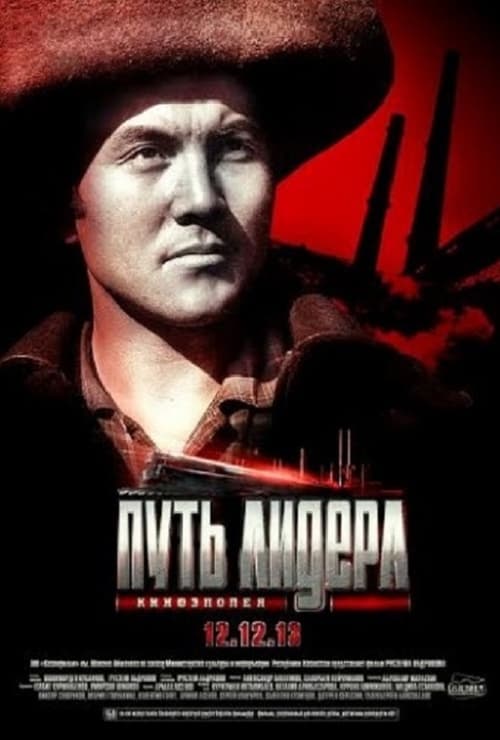
Fiery River
Plot
The second part of the epic "The Way of the Leader" tells about Nursultan Nazarbayev's student years, about the most important stages of his personality formation set on historical events, when the future of Kazakhstan's industry was being built in the steppes.
Get the Weekly Woke Watchlist
New and trending movies scored for woke bias, preachy messaging, and forced political themes — before you waste your evening.
No spam. One useful email per week.
Overall Series Review
Categorical Breakdown
The film centers on the personal merit and political rise of a singular Kazakh leader, a focus that opposes the principle of intersectional hierarchy. The narrative is a nation-building project celebrating a specific ethnic-national identity and its champion, which is the antithesis of the vilification of one's own culture.
The movie is a direct product of the state's drive for national self-definition, explicitly celebrating the formation of a sovereign Kazakh identity and the sacrifices of its leader. The narrative expresses profound gratitude and respect for the nation, its industry, and the personal journey that led to its establishment.
The core of the plot focuses on a young man's journey from his home to heavy industry and education in a challenging, industrial environment, centering a male-dominated path of career and political leadership. Women are not featured as central agents in the story of national industrial formation, indicating a traditional, male-centric narrative structure where female characters are peripheral.
The narrative is a state-produced biography focused on the industrial and political coming-of-age of a traditional, national male leader in the Soviet and post-Soviet cultural context. The film adheres to a completely normative structure with no apparent inclusion of alternative sexualities or gender theory lecturing.
The movie primarily deals with the secular topics of industrialization, education, and political character formation within the historically atheist Soviet framework. The story champions a pragmatic, objective path of national development and progress, rather than promoting moral relativism, and does not actively vilify religion.
Get the Weekly Woke Watchlist
New and trending movies scored for woke bias, preachy messaging, and forced political themes — before you waste your evening.
No spam. One useful email per week.