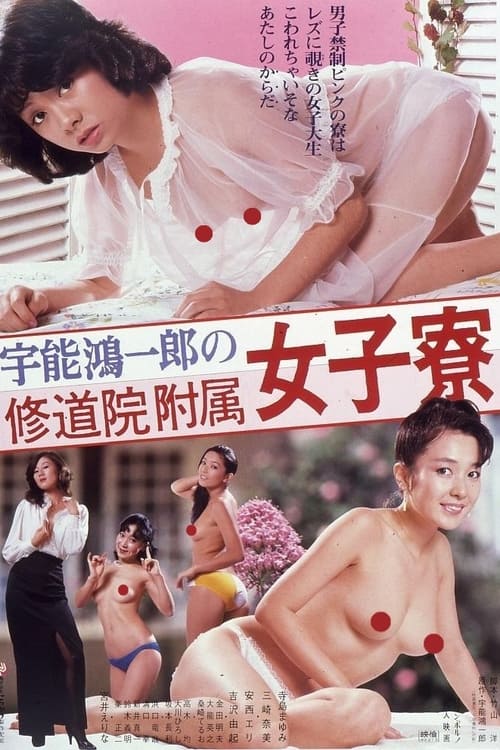
Uno Koichiro no Shûdôin Fuzoku Joshi-ryô
Plot
Get the Weekly Woke Watchlist
New and trending movies scored for woke bias, preachy messaging, and forced political themes — before you waste your evening.
No spam. One useful email per week.
Overall Series Review
Categorical Breakdown
The movie is an exploitation film from 1981 in Japan, focusing on sexual content. The narrative is entirely centered on sexual dynamics and power within a Japanese setting. Race, 'whiteness,' systemic oppression, and forced diversity are completely absent from the plot.
The film critiques a specific Japanese religious-educational institution—the convent dormitory—by framing it as a site for sexual exploitation. This deconstruction is motivated by a desire to break sexual taboos for entertainment, not by a high-level philosophical hostility toward Japanese national heritage or the foundations of Western civilization. The focus remains on localized sexual transgression.
As an erotic exploitation film, female characters are fundamentally objectified for a male audience, which directly contradicts the 'Girl Boss' trope. The plot features sexual dominance and objectification rather than 'perfect' female leads or men depicted as bumbling idiots. While the gender dynamics are exploitative and anti-complementary, they do not align with the modern 'woke' ideal of a flawless, career-focused female protagonist or the emasculation of all men.
The core of the film's erotic content is centered on the taboo nature of heterosexual transgression and exploitation within a closed female environment. There is no evidence that the movie centers alternative sexualities as a primary political statement or lectures on gender ideology. Any same-sex content would exist purely as an added layer of titillation rather than a 'queer theory' deconstruction of the nuclear family.
The core premise of the film is to set explicit sexual encounters within a religious institution—a convent and its dormitory—specifically to shatter the image of religious purity and institutional chastity. The plot uses the religious setting as a foil to be corrupted and sexually exploited, directly framing traditional religion as a restrictive, repressive force that is the target of transgression.
Get the Weekly Woke Watchlist
New and trending movies scored for woke bias, preachy messaging, and forced political themes — before you waste your evening.
No spam. One useful email per week.