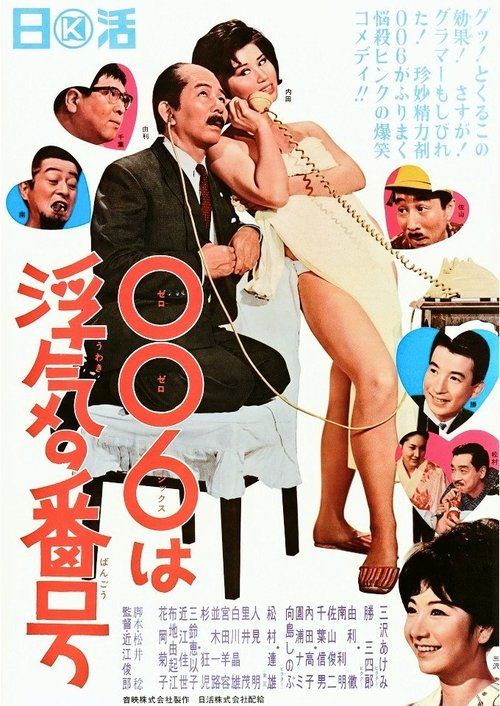
006 wa uwaki no number
Plot
Japanese sex comedy film.
Get the Weekly Woke Watchlist
New and trending movies scored for woke bias, preachy messaging, and forced political themes — before you waste your evening.
No spam. One useful email per week.
Overall Series Review
Categorical Breakdown
The narrative is purely focused on a domestic Japanese business rivalry and the farcical consequences of an aphrodisiac drug. Characters are judged entirely on their comedic roles and competence in the corporate conspiracy. There is no presence of racial themes, vilification of 'whiteness,' or forced insertion of diversity, as the cast is entirely Japanese and authentic to the setting.
The film’s critique is aimed at internal Japanese flaws, specifically corporate corruption and political bribery within its own national context. It is a satire of Japanese social and business culture, not a condemnation of 'Western civilization,' therefore it does not meet the criteria for Oikophobia as defined.
The gender dynamic centers on men, particularly the older president, pursuing younger women due to the effects of the aphrodisiac, which is a traditional, if crude, celebration of heterosexuality and male desire. The women involved are often geisha or mistresses. This context is anti-feminist in modern terms, yet it avoids the tropes of the 'Girl Boss' and 'motherhood is a prison,' sticking to traditional, objectifying roles.
The plot's focus on an aphrodisiac and the resulting 'affairs' is strictly within the confines of male-female relationships and traditional infidelity. There is no presence of alternative sexual ideologies, deconstruction of the nuclear family through a queer theory lens, or gender ideology lecturing.
The film’s morality is entirely secular and amoral, revolving around corporate deceit and infidelity. Faith is neither a source of strength nor a root of evil, existing outside the frame of the conflict. This represents a spiritual vacuum but is not actively hostile or 'anti-theistic' towards religion, especially Christianity, which is irrelevant to the Japanese comedy setting.
Get the Weekly Woke Watchlist
New and trending movies scored for woke bias, preachy messaging, and forced political themes — before you waste your evening.
No spam. One useful email per week.