Sing
Plot
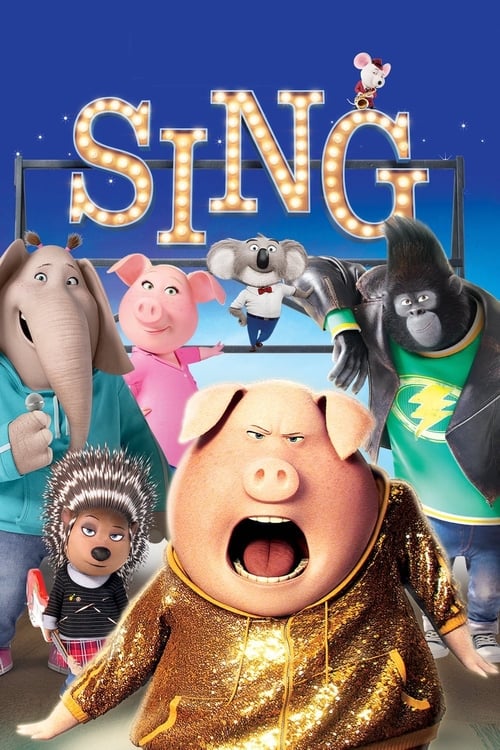
A koala named Buster recruits his best friend to help him drum up business for his theater by hosting a singing competition.
Get the Weekly Woke Watchlist
New and trending movies scored for woke bias, preachy messaging, and forced political themes — before you waste your evening.
No spam. One useful email per week.
Overall Series Review
Categorical Breakdown
The film’s central idea is universal meritocracy; all characters, regardless of species, background, or social standing, are judged purely by their singing talent. The diverse cast of animals, including a gorilla from a crime family, a mouse street performer, and a shy elephant, are all united by a single goal. The narrative does not lecture on privilege or systemic oppression, and all characters face personal obstacles that are overcome through individual effort and community encouragement.
The central conflict revolves around Buster Moon's deep commitment to saving his family's cultural institution, the grand old theater, which he loves and reveres. This theme of protecting and rebuilding a cherished local institution directly counters civilizational self-hatred. The modern city setting is depicted as a vibrant and exciting place where dreams can be pursued, not a fundamentally corrupt culture.
The score is elevated slightly due to the narrative arc of Rosita, the pig, who is a stay-at-home mother of 25 whose domestic life is portrayed as a 'drudgery' she must escape to find personal fulfillment. The subplot of the female porcupine, Ash, revolves around breaking free from her mediocre, less-talented male bandmate/boyfriend who tries to control her creative expression. The male lead, Buster, is depicted as an incompetent hustler, but not maliciously evil. The message leans toward female self-actualization outside the home without fully embracing the 'Girl Boss' or anti-natalist extremism.
The film features only traditional male-female pairings (Rosita and her husband Norman, Ash and her boyfriend Lance). Sexuality is not a plot point for any character. There are no overt messages regarding alternative sexualities, gender identity, or a deconstruction of the nuclear family structure. The focus remains entirely on non-sexual, personal dreams.
The movie operates in a secular space, focused solely on the 'follow your dreams' message. It does not contain any religious figures, iconography, or critique of faith. The core morality centers on honesty, courage, and community, which are objective, positive virtues. There is no embrace of moral relativism or depiction of religion as a root of evil.
Get the Weekly Woke Watchlist
New and trending movies scored for woke bias, preachy messaging, and forced political themes — before you waste your evening.
No spam. One useful email per week.