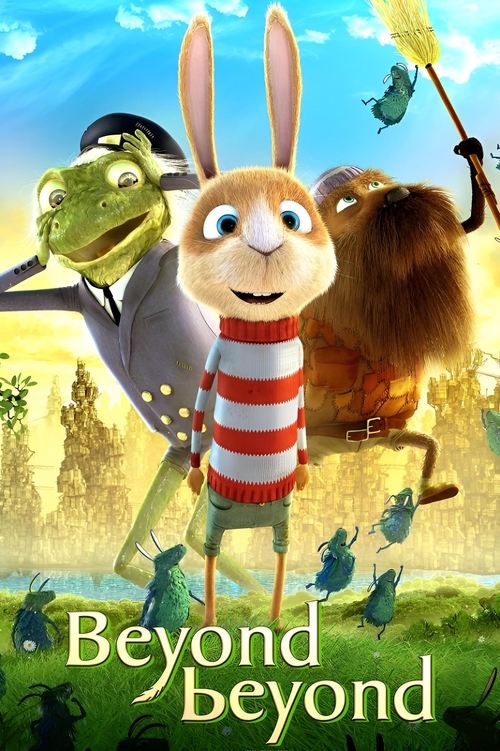
Beyond Beyond
Plot
Beyond Beyond is a story about wanting the impossible. A story about a little rabbit boy not old enough to understand the rules of life, who takes up the fight against the most powerful force. While doing so, he learns more and more about life.
Get the Weekly Woke Watchlist
New and trending movies scored for woke bias, preachy messaging, and forced political themes — before you waste your evening.
No spam. One useful email per week.
Overall Series Review
Categorical Breakdown
The characters are anthropomorphic animals (rabbits, a dog, a bird-like creature), making race or 'whiteness' irrelevant to the casting or plot. Character motivation is driven purely by merit of the soul, specifically the young rabbit's love for his mother and his courage to face the unknown. The narrative does not contain any lectures on privilege or systemic oppression.
The entire plot is built upon the main character's desire to restore his home and family unit, viewing the loss of his mother as the greatest form of chaos. The quest is a journey of *restoration*, not a deconstruction or rejection of his heritage or home life. The film celebrates the family institution.
The mother figure is the driving emotional force of the entire movie, portrayed as a beloved figure whose loss motivates the heroic quest, which runs counter to anti-natalism. The hero is a young male rabbit, and while the father is sometimes depicted as having weaknesses, the overall dynamic focuses on familial love and responsibility rather than the emasculation of males or a 'Girl Boss' trope. Gender roles are complementarian in the context of the traditional family structure.
The narrative centers on the core nuclear family unit—father, mother, and son—and the emotional struggle to preserve it. The plot contains no element of alternative sexualities, deconstruction of the nuclear family, or instruction on gender ideology.
The movie contains clear allegorical elements for a transcendent moral and spiritual reality. The afterlife is an organized 'Kingdom' ruled by a 'Feather King,' and a divine-like figure called 'Mora' governs destiny and justice. One analysis notes a strong Christian theme involving salvation (tickets), sacrifice, and forgiveness. This embraces an objective, transcendent moral law, placing the score at the low end of the spectrum.
Get the Weekly Woke Watchlist
New and trending movies scored for woke bias, preachy messaging, and forced political themes — before you waste your evening.
No spam. One useful email per week.