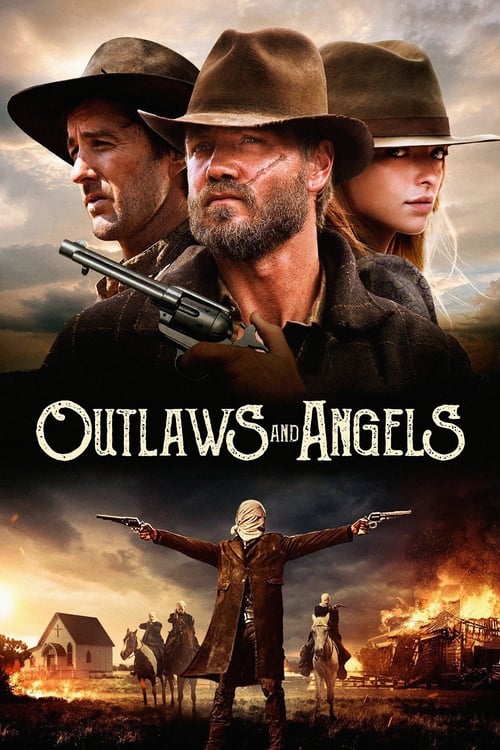
Outlaws and Angels
Plot
A gang of cold-blooded outlaws narrowly escapes a blood-soaked bank robbery in a grimy frontier town. With a notorious bounty hunter hot on their trail, these nefarious criminals desperately need a place to hide out before night falls. Fate brings them to the home of the Tildons, a seemingly innocent family with two feisty daughters. As the men settle in, an impetuous game of cat and mouse plays out during the cold, black night. Come morning, nothing will ever be the same.
Get the Weekly Woke Watchlist
New and trending movies scored for woke bias, preachy messaging, and forced political themes — before you waste your evening.
No spam. One useful email per week.
Overall Series Review
Categorical Breakdown
The central conflict does not rely on racial or intersectional hierarchy. The characters are judged solely by the depth of their psychopathy and violence. The film’s focus is on universal moral depravity rather than systemic oppression or the vilification of whiteness.
The traditional Western institution of the pious frontier home is framed as fundamentally corrupt and unhinged. The narrative reveals the victim family to possess as much moral grotesqueness as their attackers. The destruction of the home, family, and ancestor's heritage is the main engine of the plot, suggesting the institutions are rotten from within.
The daughter, Florence, transforms from an oppressed family member into a ruthless, bloodthirsty 'gunslinger' and ‘Tarantino heroine’ who embraces sadism to achieve her liberation. The male patriarch is depicted as helpless, and the other men are shown as bumbling idiots or toxic psychopaths. This transformation is a strong 'Girl Boss' archetype achieved by transcending traditional morality and family structure.
The narrative centers on brutal, non-ideological sexual violence, including a prolonged scene of threatened sodomy against the male patriarch. This functions as a tool for sadism and emasculation of the religious man, not as an attempt to center alternative sexual identities or promote a modern gender ideology message.
The Christian characters are directly vilified, with the patriarch being a corrupt preacher and his family being ‘unhinged beyond their religious fanaticism.’ The villains openly ‘taunt God’ and morality is wholly subjective and defined by 'power dynamics' within the home invasion scenario. Traditional faith is shown as a corrupt facade for deep moral rot.
Get the Weekly Woke Watchlist
New and trending movies scored for woke bias, preachy messaging, and forced political themes — before you waste your evening.
No spam. One useful email per week.