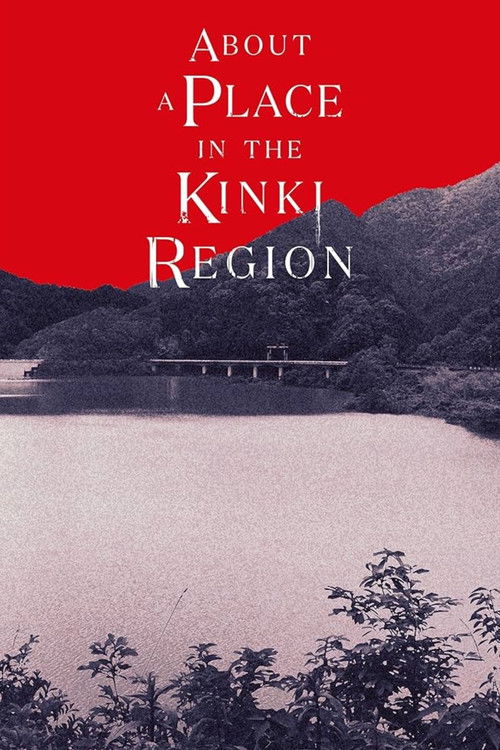
About a Place in the Kinki Region
Plot
After an editor of an occult magazine suddenly vanishes, his friend Chihiro and his co-worker Yusei set out to discover the reason behind his disappearance.
Get the Weekly Woke Watchlist
New and trending movies scored for woke bias, preachy messaging, and forced political themes — before you waste your evening.
No spam. One useful email per week.
Overall Series Review
Categorical Breakdown
The movie is a Japanese production set in Japan, featuring ethnically Japanese characters. Character merit and professional competence, such as being a veteran writer or journalist, define the protagonists' roles in the investigation. The plot does not rely on race or intersectional hierarchy, nor does it feature race-swapping or the vilification of any ethnic group.
The central horror elements revolve around local Japanese occult phenomena, specific folklore like the *kodama* (tree spirit), and decades of paranormal activity within the Kinki region. The narrative engages with regional heritage by using its dark and esoteric aspects as the source of the supernatural terror. It is not framed as an indictment of Japanese civilization as fundamentally corrupt.
The investigation is a joint effort between the veteran writer Chihiro and the journalist Yusei. Chihiro is a highly capable professional who spearheads the search for her missing boyfriend. The male co-lead acts as a partner, not a bumbling subordinate, creating a dynamic of complementary professional effort. Any dark themes regarding family or sacrifice are inherent to the horror plot and do not constitute an explicit anti-natalist or anti-male social lecture.
The story centers on a supernatural mystery and the search for a missing editor, whose personal life is only referenced through his relationship with his girlfriend, Chihiro. There is no evidence in the plot or themes of an emphasis on alternative sexualities, the centering of gender ideology, or a critique of the traditional nuclear family structure.
The core of the horror is steeped in the occult, paranormal phenomena, and localized folk spirituality. The antagonists are supernatural curses and entities, which implicitly acknowledge a transcendent, albeit terrifying, reality. The film does not feature a critique of traditional Abrahamic religion or promote universal moral relativism.
Get the Weekly Woke Watchlist
New and trending movies scored for woke bias, preachy messaging, and forced political themes — before you waste your evening.
No spam. One useful email per week.