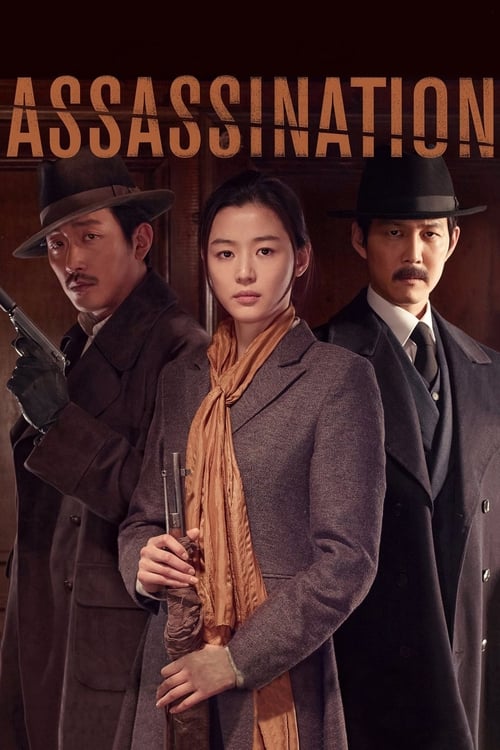
Assassination
Plot
In Japanese-occupied Korea, three freedom fighters are assigned a mission to assassinate a genocidal military leader and his top collaborator. But the plan goes completely awry amidst double-crossings, counter-assassinations, and a shocking revelation about one of the assassins' past.
Get the Weekly Woke Watchlist
New and trending movies scored for woke bias, preachy messaging, and forced political themes — before you waste your evening.
No spam. One useful email per week.
Overall Series Review
Categorical Breakdown
The conflict is based on a national struggle: Korean independence fighters versus Japanese oppressors and a Korean collaborator. The plot focuses on moral choice and professional merit; the protagonists are judged by their dedication to the cause, not by an intersectional hierarchy. The concepts of 'whiteness' or 'privilege' do not apply to the central dynamic, which is anti-colonial.
The entire premise is an act of national affirmation, honoring ancestors who fought for freedom and seeking justice against those who betrayed their homeland. The film celebrates the Korean nation and its resistance against a foreign power, directly opposing the concept of civilizational self-hatred.
The team's leader and central figure is a highly competent female sniper, Ahn Ok-yun. Her competence is established through her skill and resolve, not by depicting all men around her as incompetent, which prevents a 10/10 'Girl Boss' score. The male members of the team are also capable heroes, and the film includes a compelling romantic subplot, which is not anti-natalist or anti-family messaging.
The narrative makes no mention of sexual ideology or gender theory. The focus is entirely on the historical, military, and political struggle for national liberation. The traditional male-female pairing is present in the form of a heroic romantic subplot, and the nuclear family is referenced in the backstory as the target of the villain's greed and betrayal.
The movie operates on an explicit moral framework where good and evil are objective truths. Traitors and collaborators are punished for their greed and betrayal, with the narrative underscoring the necessity of justice, even decades later. This alignment with a transcendent moral law stands in direct opposition to moral relativism.
Get the Weekly Woke Watchlist
New and trending movies scored for woke bias, preachy messaging, and forced political themes — before you waste your evening.
No spam. One useful email per week.