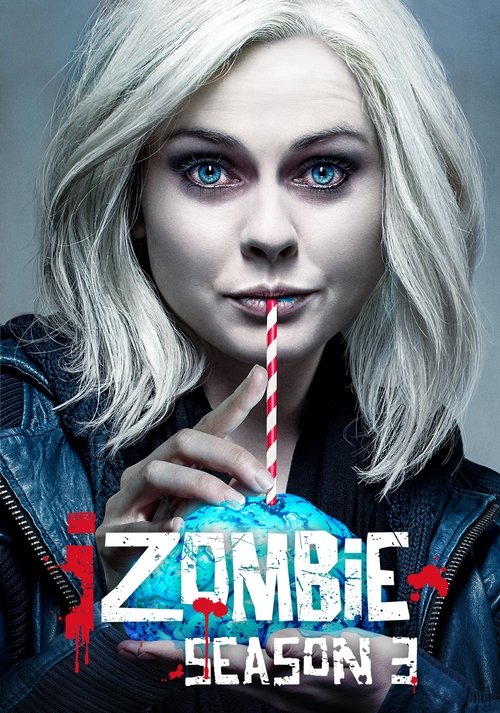
iZombie
Season 3 Analysis
Season Overview
Liv faces a rising foe in Vivian Stoll, head of Fillmore-Graves Enterprises and a visionary whose long-term plan is to make Seattle a zombie capital.
Season Review
Categorical Breakdown
The main conflict is an explicit, thinly-veiled allegory where zombism represents a marginalized, oppressed minority class. The narrative frames the 'zombie truther' antagonists (who are largely white males) as domestic terrorists, directly drawing a comparison to the 'white supremacist movement.' The plot exists to illustrate bigotry, privilege, and the need for the oppressed (zombies) to organize and defend themselves.
The season demonstrates the failure of existing 'human made systems of government' to contain or manage the crisis, leading to the collapse of order in Seattle and the imposition of martial law by a private, non-governmental, zombie-run force. The antagonists representing prejudice and violence are explicitly tied to domestic extremism that targets the city's inhabitants, implying the home culture is fundamentally compromised and bigoted.
The core antagonist and anti-hero of the season is Vivian Stoll, a powerful female 'visionary' and head of a private military corporation, Fillmore-Graves. The protagonist, Liv, is constantly centered, taking on new, dominant personalities weekly. Male characters are either in secondary roles (Ravi, Clive) or depicted as villains/bumbling partners (Blaine, Major). The romantic plots are characterized by 'romantic chaos' and characters 'banging anyone,' undermining traditional romantic or family fulfillment.
The zombie condition itself is a direct and central allegory for a marginalized sexual identity. The narrative consistently uses 'in the closet' and 'out of the closet' language to describe a character's zombie status. The theme revolves around a person's core, immutable nature (zombieism/queer identity) being the source of their societal conflict and the need for acceptance and community. The fluidity of sexuality is toyed with via the brain-of-the-week mechanic.
The primary element is the rise of a 'bloodthirsty religious cult' led by Angus McDonough, Blaine's father, framing a new extreme faith as a source of murder and chaos in the city. Traditional morality is often undermined by the subjective ethical dilemmas of being a zombie, reinforcing a framework of moral relativism where even 'monsters' can be 'usually not' bad, depending on the individual.