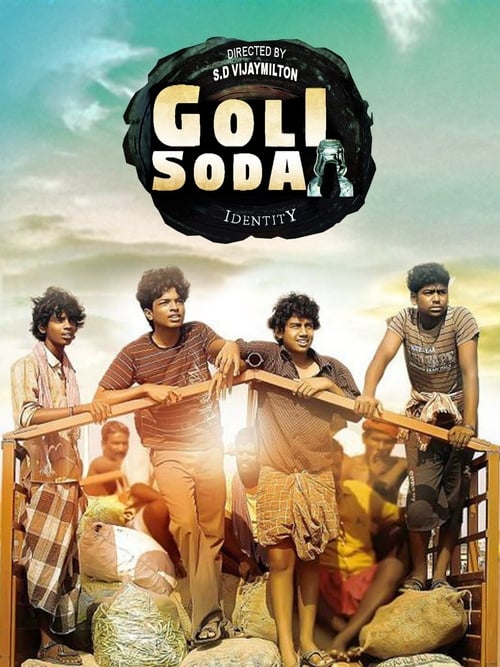
Goli Soda
Plot
Four lads find themselves in a situation where they have to take on a powerful man (and his innumerable henchmen) to reclaim their identity.
Get the Weekly Woke Watchlist
New and trending movies scored for woke bias, preachy messaging, and forced political themes — before you waste your evening.
No spam. One useful email per week.
Overall Series Review
Categorical Breakdown
The film’s central conflict is a universal struggle of the marginalized, poor, and orphaned against a powerful, wealthy oppressor who holds a position of authority. The 'identity' the boys seek is one of self-made respect and merit earned through starting a business and proving their capabilities, not one based on intersectional hierarchy. Characters are judged entirely by their actions, bravery, and hard work, demonstrating a universal meritocracy.
The movie is an Indian Tamil-language production, and the analysis is focused on hostility toward its own culture or civilization. The setting is the Koyambedu market, which is portrayed as a vibrant, gritty, but cherished home for the boys and a microcosm of society. The antagonist is a powerful man within the market's social structure, not an indictment of the culture itself. The narrative celebrates community support and the resilience of the local people, demonstrating gratitude toward their home and its values.
The most significant female character, Aachi, is a shop owner who acts as a maternal and moral guide for the orphaned boys, treating them like her sons and inspiring them toward self-improvement. Her role is protective, nurturing, and complementary to the male protagonists' journey. There are no elements of a 'Girl Boss' trope, male emasculation, or anti-family messaging; instead, a strong, protective feminine presence is celebrated.
The narrative is entirely focused on the socio-economic struggle of the four male protagonists and includes a traditional heterosexual teenage romance subplot. The film makes no references to alternative sexualities, gender ideology, or deconstruction of the nuclear family. The presentation of relationships and family structures adheres to a normative structure, making any 'Queer Theory Lens' analysis irrelevant.
The movie is an action drama focused on a social struggle for respect and identity. There is no overt or implied hostility toward religion. The moral framework is objective, where courage, loyalty, hard work, and earning respect are clearly good, and bullying or exploiting the weak is clearly evil. The film operates on a transcendent moral law of justice and respect, not subjective power dynamics.
Get the Weekly Woke Watchlist
New and trending movies scored for woke bias, preachy messaging, and forced political themes — before you waste your evening.
No spam. One useful email per week.