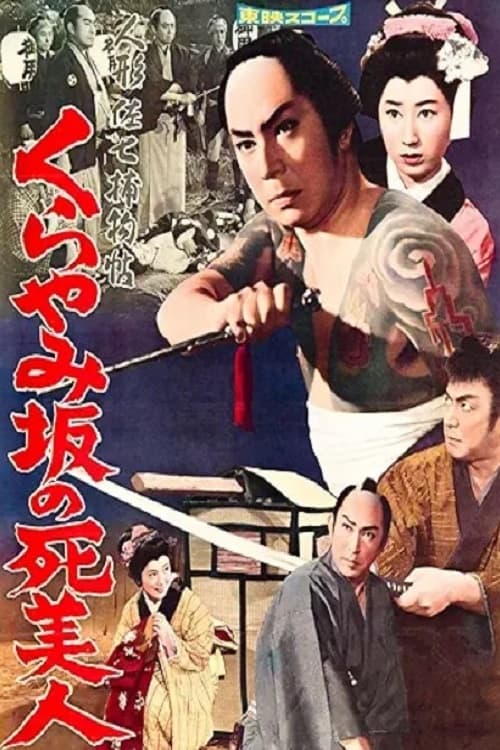
Casebook of Dandy Sashichi: The Dead Beauty of Kurayamizaka
Plot
The second installment of the detective series starring Tomisaburō Wakayama. Depicting the remarkable achievements of Sashichi, in unraveling the mysterious incidents surrounding the Bat Slug Gang swirling in the streets of Edo's 808 districts with his skilled handling of the jutte.
Get the Weekly Woke Watchlist
New and trending movies scored for woke bias, preachy messaging, and forced political themes — before you waste your evening.
No spam. One useful email per week.
Overall Series Review
Categorical Breakdown
The plot centers on the lead character's skill and intellect as a detective (Sashichi) in a traditional Edo-period setting. Character competence and merit are the driving forces of the mystery, which revolves around a gang and murder, not immutable characteristics or an intersectional hierarchy. The cast is entirely Japanese and historically authentic to the Edo-period setting; there is no 'race-swapping' or vilification of 'whiteness,' which is culturally irrelevant to the film's context.
The film is a product of 1960 Japanese cinema set in historical Edo. The genre itself, *jidaigeki*, celebrates or at least operates within the context of Japanese civilization and its traditional justice systems. The detective's success in cleaning up the streets of Edo reinforces a traditional notion of justice and stability within the 'home culture,' exhibiting no hostility toward its own civilization or Western civilization.
The protagonist, Sashichi, is a male detective who utilizes his skill and jutte to solve the case and apprehend the criminals. This centers a traditionally masculine role as protective and competent. The traditional gender dynamics of 1960s Japanese period cinema are maintained. There is no presence of the 'Girl Boss' trope, the emasculation of male characters, or anti-natalist messaging.
The narrative focus is on a murder mystery and a criminal gang in the Edo period. The plot follows a normative structure, making sexual identity and gender ideology foreign concepts to the story's themes and setting. The film avoids any deconstruction of the nuclear family or lecturing on alternative sexualities, which is typical for a 1960 Japanese period drama.
As a film set in Edo-period Japan, the spiritual context is rooted in local traditions like Shinto and Buddhism, not Christianity. The plot is focused on crime and justice, affirming a basic moral law that opposes the actions of the criminal gang. The film acknowledges objective truth (the identity of the killer/gang) and a transcendent moral order where the hero works to uphold the law.
Get the Weekly Woke Watchlist
New and trending movies scored for woke bias, preachy messaging, and forced political themes — before you waste your evening.
No spam. One useful email per week.