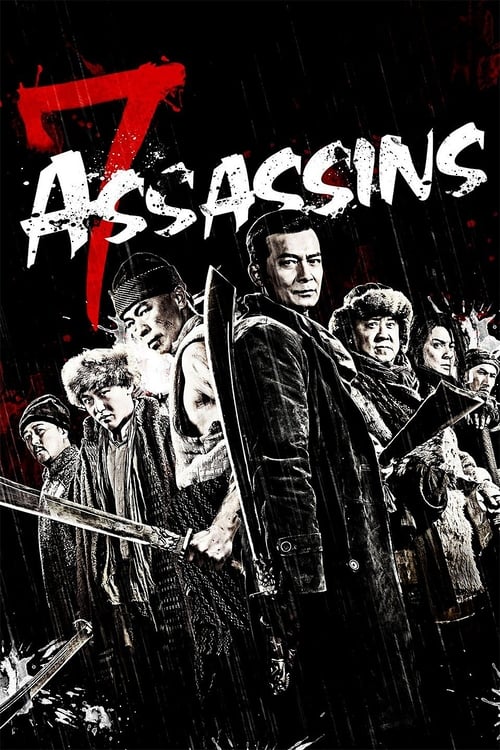
7 Assassins
Plot
When social unrest plagues a Kingdom in ancient China, the Imperial Court collects stockpiles of gold from local governments to expand the royal army. However, the gold is robbed while in transport. In a desperate move to retrieve the stolen treasure, elite royal guards are sent on a mission to go after the gold but soon find out they are not the only ones in pursuit of it.
Get the Weekly Woke Watchlist
New and trending movies scored for woke bias, preachy messaging, and forced political themes — before you waste your evening.
No spam. One useful email per week.
Overall Series Review
Categorical Breakdown
Characters are judged entirely by their martial skill, heroism, and loyalty to the revolutionary cause. The casting is historically authentic for the Chinese setting. The narrative is focused on an internal political struggle (revolutionaries versus the corrupt Qing Dynasty), and there is no introduction or reliance on Western-style intersectional identity hierarchy.
The entire plot is built on a retired group of heroes recognizing their duty to save their country and fighting for the 'dignity of the country.' The movie actively celebrates and pays homage to the 'Golden Generation' of its own national film heritage, directly affirming a respect for the past and the nation's culture.
Gender roles are largely traditional; the primary female heroine, Xilian, is defined by her relationship with the male protagonist, who rescued her and her child, emphasizing complementarianism and motherhood. While there is a strong female antagonist, the 'Bandit Queen,' this is a traditional wuxia trope of a powerful villainess and does not represent a 'Girl Boss' ideal of perfection or male emasculation.
The film, a period martial arts epic, contains no evidence of centering alternative sexualities, promoting gender ideology, or deconstructing the nuclear family. The primary female character's romantic arc involves being a mother and falling for a male protector.
The movie includes a Christian priest whose presence is described as a nuisance to the community. This character is literally crucified in the film, which is a highly hostile and violent portrayal of traditional religion, positioning it as a source of annoyance that is subject to extreme punishment.
Get the Weekly Woke Watchlist
New and trending movies scored for woke bias, preachy messaging, and forced political themes — before you waste your evening.
No spam. One useful email per week.