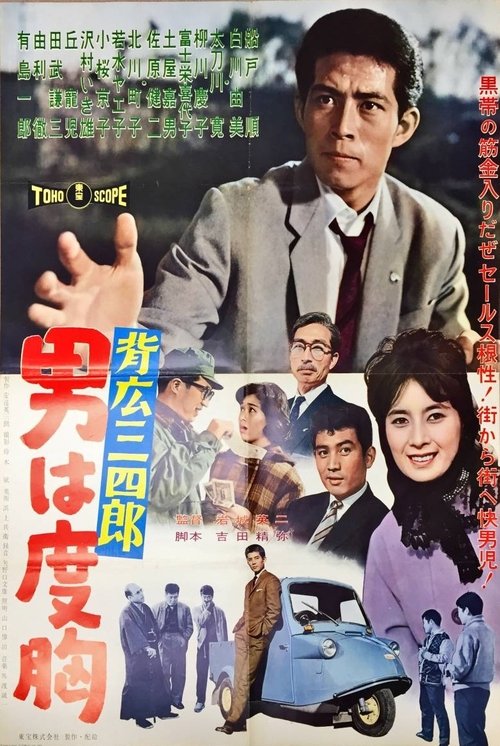
Sebiro Sanshirō otoko wa dokyō
Plot
1961 Japanese movie
Get the Weekly Woke Watchlist
New and trending movies scored for woke bias, preachy messaging, and forced political themes — before you waste your evening.
No spam. One useful email per week.
Overall Series Review
Categorical Breakdown
The entire plot focuses on the protagonist's individual merit, discipline, and moral growth, not on his immutable characteristics. The central theme is universal meritocracy and self-improvement through practice. There is no vilification of any race or forced insertion of diversity, as the cast is historically and culturally authentic to its setting in Meiji-era Japan.
The film functions as a celebration of Japanese martial arts, traditional values, and spiritual philosophy. It centers a specific Japanese cultural framework (e.g., the development of Judo) and shows respect for ancestral and cultural institutions. The narrative is a study of a young man learning to respect his home culture's moral shields.
The story is male-centric, focusing on the education and initiation of the male hero, Sanshiro. Women in this narrative are secondary characters who are typically victims or inspirational backdrops for the male characters' drama. The dynamic is one of traditional gender roles and complementary masculinity, which is antithetical to the 'Girl Boss' trope and emasculation.
The narrative adheres to a normative structure, centering on the male-female pairing and the traditional journey of the male hero. There is no presence of queer theory, gender ideology, or deconstruction of the nuclear family. Sexuality is not a focus of the plot or a central character trait.
The film’s central act of self-realization is tied to a profound spiritual moment, often involving a Buddhist monk and a symbol of purity (the lotus blossom). Faith, spiritual discipline, and higher moral law are presented as the essential source for the protagonist’s strength and self-control. There is a clear acknowledgment of transcendent morality.
Get the Weekly Woke Watchlist
New and trending movies scored for woke bias, preachy messaging, and forced political themes — before you waste your evening.
No spam. One useful email per week.