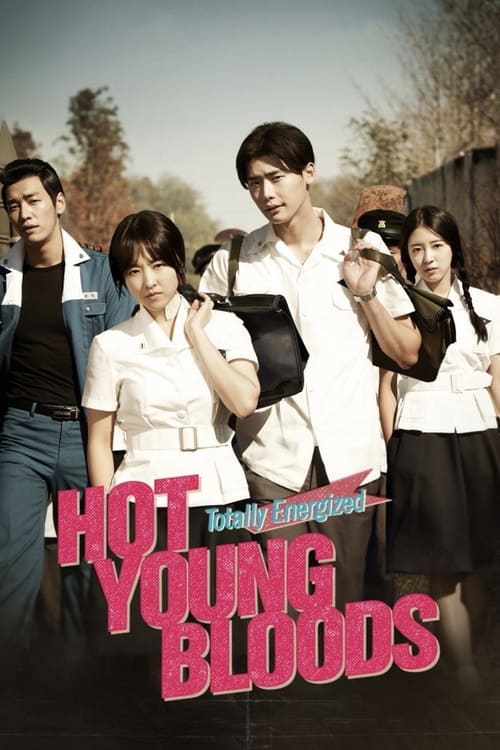
Hot Young Bloods
Plot
A comedy romance movie about the last generation of youths and their passionate romance based in Hongseong, Chungcheong Namdo in the 1980s.
Get the Weekly Woke Watchlist
New and trending movies scored for woke bias, preachy messaging, and forced political themes — before you waste your evening.
No spam. One useful email per week.
Overall Series Review
Categorical Breakdown
The movie is a South Korean production set in South Korea, featuring an ethnically homogeneous cast that is authentic to the setting and time period. The narrative focuses on high school drama and class/regional dynamics (rural vs. Seoul), not race, immutable characteristics, or intersectional hierarchy. The story operates on a universal meritocracy where characters are defined by their strength, charm, and emotional growth, not a political lecture on privilege.
The film deliberately evokes a sense of nostalgia, paying tribute to the era and the 'vibrant, tumultuous 1980s in rural Korea.' The depiction of rural high school life, including gang activities, is not idealized but also does not frame the home culture or heritage as fundamentally corrupt. The movie explores universal themes of growing up under societal expectations, showing gratitude and respect for the setting and its cultural context.
The female lead, Young-Sook, is the 'feared leader of a female gang' who is physically tough, 'bad-ass,' and can dominate male gang members. The male lead, Joong-Gil, is repeatedly portrayed as a bumbling playboy and 'weakling' who gets bruised often and is protected by Young-Sook. This dynamic strongly aligns with the 'Girl Boss' trope and involves a distinct emasculation of the main male character in favor of the female's physical dominance. However, her actions are driven by unrequited love, keeping the score in the middle range as the motivation is romantic, not purely political.
The entire central plot revolves around a traditional heterosexual love square, focusing on crushes and romantic rivalries between male and female students. The sub-plot concerning a 'secret relationship' among the teachers is revealed to be a clandestine male-female affair. The narrative structure remains entirely normative, and there is no presence of queer theory, gender ideology, or deconstruction of the nuclear family.
Religion, faith, and spirituality are entirely absent from the main plot and themes, which focus exclusively on the high-energy, coarse humor, and melodrama of youthful romance and gang rivalries. The movie does not display hostility toward religion or promote moral relativism as a core theme; morality is instead driven by the high school social code and personal emotional truth.
Get the Weekly Woke Watchlist
New and trending movies scored for woke bias, preachy messaging, and forced political themes — before you waste your evening.
No spam. One useful email per week.