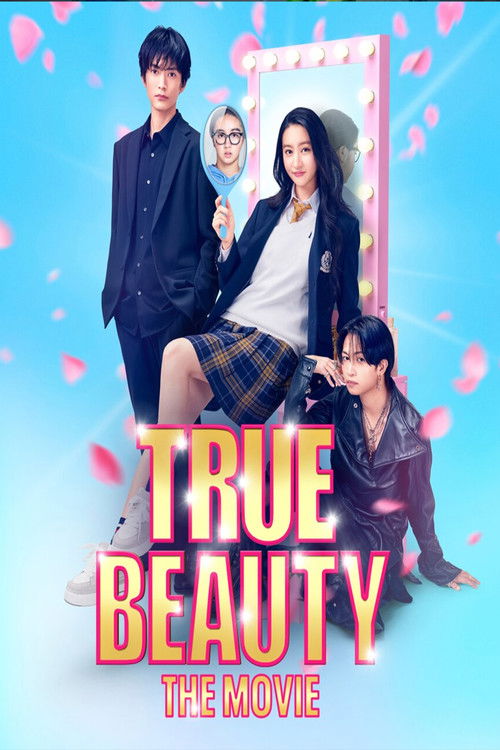
True Beauty: The Movie - Part 1
Plot
Reina, who feels insecure about her looks, masters the art of makeup and transforms into a "goddess". Her makeover sparks a sweet, heart-throbbing love triangle with the enigmatic Shun and warm Yu, where secrets and tender emotions could change everything.
Get the Weekly Woke Watchlist
New and trending movies scored for woke bias, preachy messaging, and forced political themes — before you waste your evening.
No spam. One useful email per week.
Overall Series Review
Categorical Breakdown
The central conflict revolves around discrimination based on physical appearance (lookism), an immutable characteristic, yet it does not engage with race-based intersectional hierarchy or the vilification of whiteness. The narrative strives toward a meritocracy of character, as the love interests are drawn to the protagonist’s true personality and inner self, rather than her made-up appearance.
The movie is a Japanese production based on a South Korean webtoon, and the critique is directed toward the societal pressures and beauty standards endemic to its own East Asian culture. This internal cultural criticism of a specific social problem does not constitute hostility toward Western civilization or its institutions.
The female protagonist is deeply insecure and must learn a skill to navigate social life, which contrasts with the 'Mary Sue' trope. The male leads are handsome, popular, and supportive figures who are validated within the narrative structure. The plot is focused on traditional heterosexual romance and does not promote anti-natalist or anti-family messages.
The narrative centers entirely on a traditional male-female romantic love triangle and high school relationships. There is no presence of alternative sexual identities, critique of the nuclear family, or didactic content concerning gender ideology.
The movie operates in a secular, high school setting and the conflict is entirely social and emotional. The story contains no anti-religious or anti-Christian messaging and instead promotes a transcendent moral law: the importance of accepting and valuing one's inner character over superficial, subjective judgment.
Get the Weekly Woke Watchlist
New and trending movies scored for woke bias, preachy messaging, and forced political themes — before you waste your evening.
No spam. One useful email per week.