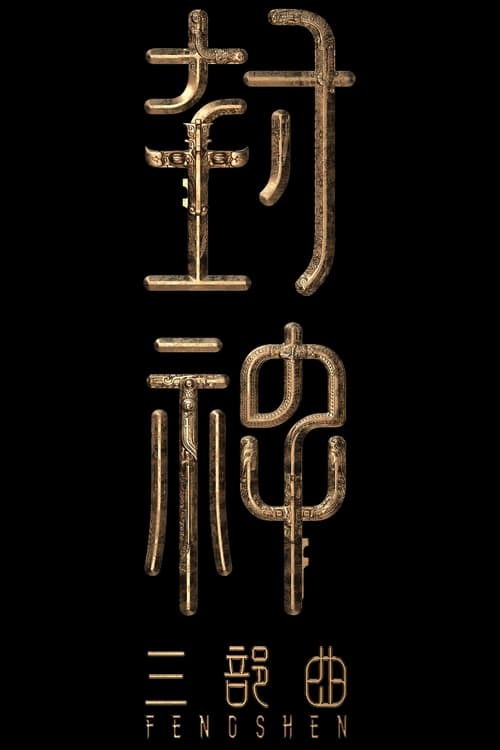
Creation of the Gods III: Creation Under Heaven
Plot
Ji Fa unites the princes of the four directions to march into Chaoge. Yin Shou and Tong Tian Jiaozhu set up the 'Nine-bend Yellow River Formation' and the 'Zhu Xian Formation'. Yuan Shi Tianzun brings the twelve golden immortals down the mountain, and the war between the three realms of humans, immortals and demons is about to break out.
Get the Weekly Woke Watchlist
New and trending movies scored for woke bias, preachy messaging, and forced political themes — before you waste your evening.
No spam. One useful email per week.
Overall Series Review
Categorical Breakdown
The casting is historically and culturally authentic to its Chinese source material and is not concerned with an intersectional lens. Characters are judged solely by their moral standing and merit—virtuous heroes like Ji Fa are elevated, while the corrupt King Yin Shou is vilified. The conflict is dynastic and ethical, not based on immutable characteristics or a lecture on privilege.
The film functions as a celebration and re-telling of one of the cornerstones of Chinese literature and mythology, explicitly embracing the enduring values and culture of the nation. The narrative is about restoring righteous governance and social order by overthrowing a corrupt king, thus honoring ancestors and traditional institutions rather than deconstructing them.
The core dramatic conflict is traditionally patriarchal, centering on a father-son dynamic and male leadership in war. The primary female character, the fox demon Daji, is cast in the role of a seductive temptress who corrupts the king and actively causes the destruction of the dynasty. This figure acts as a traditional femme fatale and is the root of civil chaos, which is the antithesis of the modern 'Girl Boss' trope. The emphasis is on family and dynastic order.
The narrative is entirely focused on a traditional dynastic war for control of the kingdom, which operates within a normative social and familial structure. There is no evidence of centering alternative sexualities, gender ideology, or deconstructing the nuclear family unit; such themes are irrelevant to the mythological epic's focus on war, morality, and the heavenly mandate.
The entire plot is driven by a transcendent spiritual conflict involving 'The Gods,' 'Immortals,' and 'The Three Realms.' The moral structure is objective: the evil king is overthrown because his corruption incurs the wrath of Heaven. Faith, divine intervention, and the acknowledgement of a higher moral law and divine order are the fundamental engines of the story.
Get the Weekly Woke Watchlist
New and trending movies scored for woke bias, preachy messaging, and forced political themes — before you waste your evening.
No spam. One useful email per week.