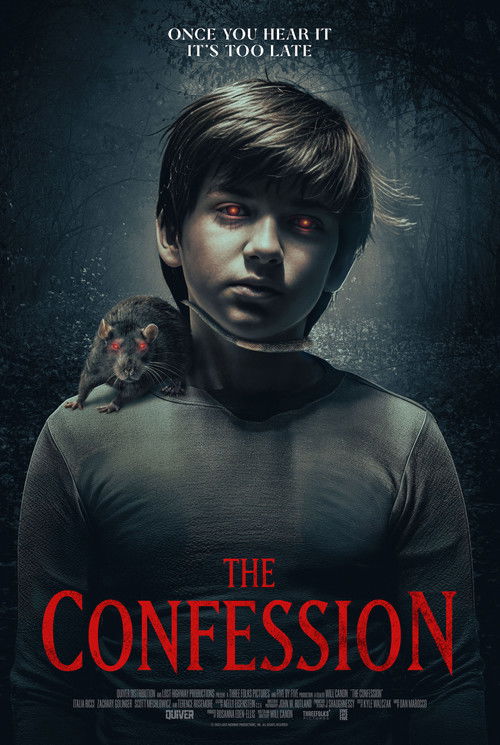
The Confession
Plot
A woman finds her late father’s tape confessing to murder tied to an evil force—now her son shows the same darkness, and she must fight to stop it.
Get the Weekly Woke Watchlist
New and trending movies scored for woke bias, preachy messaging, and forced political themes — before you waste your evening.
No spam. One useful email per week.
Overall Series Review
Categorical Breakdown
The film’s central conflict is supernatural and based on a family’s inherited guilt and the sins of the past, not on race or immutable characteristics. Casting is focused on the central family unit. The narrative does not utilize an intersectional lens and lacks any overt political lecturing on privilege or systemic oppression related to identity.
The plot contains a specific, historical critique: a small Texas town is haunted by a curse stemming from a government's failure to keep a promise regarding land distribution after flooding homes to create a lake. This focus is a local condemnation of bureaucratic and historical injustice, not a broad indictment of Western civilization or its core values. The final act is an attempt to redeem the family and community through moral responsibility.
The core of the story is the protagonist, Naomi, a widowed mother who must confront evil and save her son. Her character is portrayed with a sense of 'real fear and exhaustion,' which prevents her from being a 'perfect instantly' Mary Sue. Her strength is rooted in a protective maternal instinct and her willingness to face generational trauma, which aligns with celebrating the protective nature of family roles rather than attacking them. The father figure is flawed, but the focus is on his past actions and its supernatural consequence, not a general emasculation of males.
The narrative makes no mention of sexual identity, gender ideology, or the deconstruction of the nuclear family. The focus remains exclusively on the traditional family unit (mother, son, late father/grandfather) and the supernatural horror plot, maintaining a normative structure for the family.
The main characters' late father is a pastor at Mount Calvary Church who committed murder and suicide, a trope that casts a negative light on a Christian figure. The film actively engages with theological concepts like 'inherited guilt' and 'original sin' to frame the horror, and the protagonist’s final action is a 'spiritual' and moral confrontation, suggesting an acknowledgement of a higher moral law. The presence of a deeply flawed Christian leader raises the score, but the film’s acknowledgement of a transcendent morality and objective truth prevents it from being an outright anti-theistic polemic.
Get the Weekly Woke Watchlist
New and trending movies scored for woke bias, preachy messaging, and forced political themes — before you waste your evening.
No spam. One useful email per week.