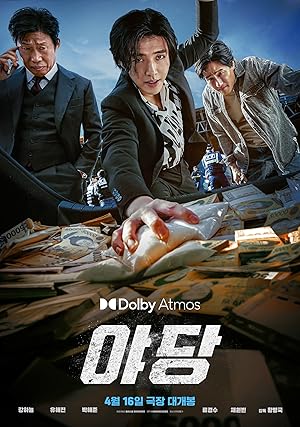
Yadang: The Snitch
Plot
In drug crime circles, 'Ya-Dang' informants sell criminals' info. Criminals use this to reduce sentences, while law enforcement uses it for arrests. Ya-Dang, police and prosecutors form a key triangle.
Get the Weekly Woke Watchlist
New and trending movies scored for woke bias, preachy messaging, and forced political themes — before you waste your evening.
No spam. One useful email per week.
Overall Series Review
Categorical Breakdown
The film is a South Korean production with an all-Korean cast. The central conflict is based on individual moral choice (ambition, betrayal) and class power dynamics (protecting a rich presidential candidate's son), not on an intersectional hierarchy of race or immutable characteristics. The narrative adheres to Universal Meritocracy/Character by focusing on the competence and moral alignment of the main characters (the snitch, the prosecutor, and the detective) in their professional/criminal roles.
The film acts as a 'scalpel to the throat of corruption,' specifically critiquing the systemic rot within South Korean legal and political institutions. While this is a critique of powerful elements within the 'home culture,' it is a traditional form of civic-minded satire and does not demonize the entire Korean heritage or frame it as fundamentally evil in comparison to an alien/superior 'other' (the 'Noble Savage' trope). This is an internal critique, not Civilizational Self-Hatred.
The main plot is driven entirely by three male leads: the snitch, the prosecutor, and the detective. The most notable female character is a disgraced actress caught in the crossfire, described as an 'ingenue who gets in over her head.' This role is that of a victim/side-player, which is the antithesis of the 'Girl Boss' or 'Mary Sue' trope. The film is centered on male ambition and a brotherly bond/betrayal. There is no evidence of emasculation or anti-natalism messaging.
As a straight crime action-thriller focused on corruption, drug busts, and revenge, the plot summary and reviews contain no information suggesting the presence of alternative sexual ideologies, centering of LGBTQ+ characters, deconstruction of the nuclear family, or gender theory lecturing. The narrative structure is entirely normative.
The film’s moral compass is secular and pragmatic, driven by human ambition and greed, leading to moral ambiguity and a 'revenge arc.' This focus on a world of cynical corruption suggests a lack of 'Objective Truth' in the public sector, scoring slightly higher than 1. However, there is no direct hostility, demonization, or satire aimed at organized religion (specifically Christianity) or faith-based characters. The morality is amoral/corrupt, not anti-theist.
Get the Weekly Woke Watchlist
New and trending movies scored for woke bias, preachy messaging, and forced political themes — before you waste your evening.
No spam. One useful email per week.