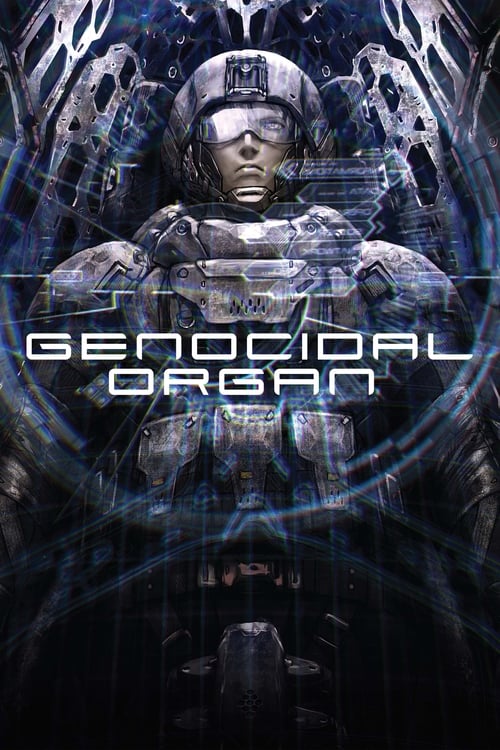
Genocidal Organ
Plot
The war on terror exploded, literally, the day Sarajevo was destroyed by a homemade nuclear device. The leading democracies transformed into total surveillance states, and the developing world has drowned under a wave of genocides. The mysterious American John Paul seems to be behind the collapse of the world system, and it's up to intelligence agent Clavis Shepherd to track John Paul across the wreckage of civilizations and to find the true heart of darkness—a genocidal organ.
Get the Weekly Woke Watchlist
New and trending movies scored for woke bias, preachy messaging, and forced political themes — before you waste your evening.
No spam. One useful email per week.
Overall Series Review
Categorical Breakdown
The narrative's central conflict is a political and philosophical one between a surveillance-authoritarian 'First World' and the chaotic 'Third World,' not a conflict based on intersectional identity. Character competence and individual moral choice drive the plot. The main characters, the protagonist Clavis Shepherd and the villain John Paul, are male, and their actions are judged on merit and ideological commitment.
The film explicitly frames Western democracies, particularly the United States, and its shadowy government group, the 'First World Order,' as the source of global instability and mass atrocity. The plot reveals that the First World intentionally orchestrates genocides in developing nations to preserve its own citizens' comfortable, surveilled security, which presents a high-level systemic critique and vilification of core Western systems and foreign policy.
Gender roles are traditional; the main heroic and villainous archetypes are men. The most prominent female character, Lucia, functions primarily as a romantic interest and a philosophical plot device whose fate is a catalyst for the male protagonist’s moral awakening. The film does not feature a 'Girl Boss' or Mary Sue character, nor does it contain anti-natalist themes.
The narrative makes no mention of sexual ideology, alternative sexualities, or gender theory. The focus is entirely on geopolitical conflict, surveillance, and philosophical discussions of violence, language, and war.
The film's philosophical core embraces moral relativism and a spiritual vacuum by proposing that genocide is not a moral failure but a deterministic, inborn linguistic 'organ' in all humans. The storyline contains extended debates on nihilism, atheism, and hell, suggesting that objective moral truth is an illusion, but it does not specifically vilify traditional organized religion, such as Christianity, as the source of evil.
Get the Weekly Woke Watchlist
New and trending movies scored for woke bias, preachy messaging, and forced political themes — before you waste your evening.
No spam. One useful email per week.