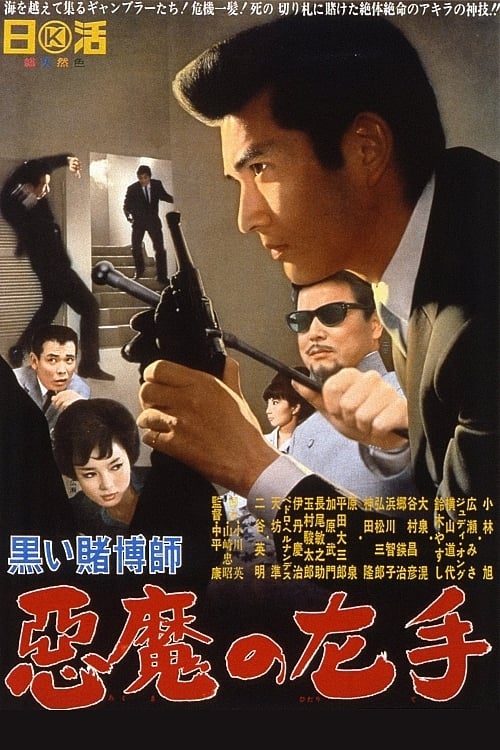
The Black Gambler: Left Hand of the Devil
Plot
The fictional land "Pandora" sends three (numbered) graduates of the "National Gambling University" to Japan. You should defeat the master player Kôji, control the international casino empire and use the profits to achieve world domination. But Japan's most famous left hand knows what to do.
Get the Weekly Woke Watchlist
New and trending movies scored for woke bias, preachy messaging, and forced political themes — before you waste your evening.
No spam. One useful email per week.
Overall Series Review
Categorical Breakdown
The narrative centers on a conflict of skill, pitting the master player Himuro Koji against the prodigy graduates of a fictional foreign nation's gambling university. The outcome is determined by gambling ability and tactical success, establishing a universal meritocracy. The hero is a Japanese character, and the film does not engage in a lecture on systemic oppression or vilification based on immutable characteristics. The title's use of 'Black' refers to the character's skill or reputation, not race.
The plot focuses on the heroic protagonist defending his home nation/underworld from the organized criminal takeover plot of the external, fictional country 'Pandora.' The film does not contain elements of hostility toward Western civilization, its institutions, or ancestors. The narrative supports the local against the external chaos.
The core of the plot is an action-thriller focused on a masculine, charismatic hero figure, Himuro Koji, who is compared to 'Nikkatsu's Bond-next-door.' One of the main antagonists is noted as a 'Pandoran heiress,' giving a woman a prominent, powerful villain role. The film does not display overt anti-masculine themes, 'Mary Sue' tropes, or anti-natal messaging, maintaining a traditional gender dynamic common to 1960s spy cinema.
The narrative is centered on international crime, gambling, and a spy-thriller formula. The plot contains no focus, discussion, or lecturing on sexual identity, alternative sexualities, or gender ideology, and does not attempt to deconstruct the nuclear family.
The conflict is a traditional struggle between a heroic figure and a villainous criminal organization seeking world domination. This structure establishes a clear moral law against a chaotic and evil plot. The film does not critique or express hostility toward any traditional religion or feature any promotion of moral relativism.
Get the Weekly Woke Watchlist
New and trending movies scored for woke bias, preachy messaging, and forced political themes — before you waste your evening.
No spam. One useful email per week.