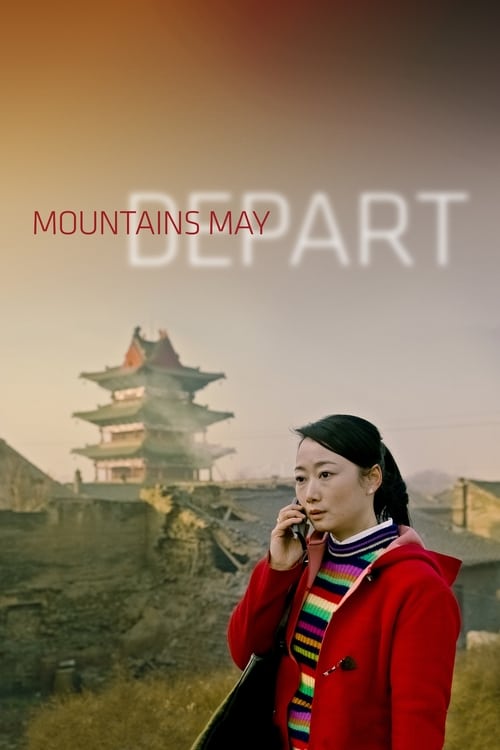
Mountains May Depart
Plot
The life of Tao, and those close to her, is explored in three different time periods: 1999, 2014, and 2025.
Get the Weekly Woke Watchlist
New and trending movies scored for woke bias, preachy messaging, and forced political themes — before you waste your evening.
No spam. One useful email per week.
Overall Series Review
Categorical Breakdown
The narrative focuses on the division between characters based on economic class and the choice between a traditional life and a materialistic one. All main characters are ethnically Chinese, and the conflict is internal to Chinese society and its global diaspora. No part of the plot involves the vilification of whiteness, race-based privilege lecturing, or the forced insertion of intersectional hierarchy. Character value is judged by their inner spiritual state and choices rather than any immutable characteristic.
The film contrasts the stability of the main character's traditional hometown with the emotional and cultural alienation experienced by those who embrace hyper-capitalism and "go West." The character who maintains traditional values, such as making long dumplings, is presented as the anchor of warmth and memory. The critique is leveled against the corrupting influence of unchecked, Western-style capitalism and cultural dissolution, which is an act of defending the home culture's emotional core, not hating it.
The female protagonist, Tao, is independent and self-confident, representing strong female agency in the face of change. Her choice of marriage is based on a desire for a "better life" (wealth), a decision that ultimately leads to melancholy, divorce, and the tragic loss of her son. The narrative depicts a woman's complex life experience, where a pursuit of material gain and divorce leads to profound emotional pain. This complexity moves the story away from a simplistic "Girl Boss" trope where career or independence is an instant, unexamined triumph, and motherhood is instead shown as a deeply valued bond that is mournfully lost.
The primary relationships and family dynamics explored are heterosexual and focus on the breakdown of the nuclear family unit due to economic and cultural choices. The narrative does not center on alternative sexualities, nor does it engage in the deconstruction of the nuclear family as an oppressive structure. The struggle of the son in the future segment revolves around his cultural alienation and relationship with an older female teacher, not gender or sexual ideology.
The film's primary critique is aimed at materialism, consumerism, and the spiritual vacuum created by runaway capitalism. Traditional markers of Chinese culture, such as a long-standing temple, are shown to remain unchanged as a constant backdrop. There is no hostility toward religion or a depiction of faith as the root of evil. The overall tone is one that seeks a moral and spiritual anchor against the chaos of modernization, pointing toward a transcendent need for connection.
Get the Weekly Woke Watchlist
New and trending movies scored for woke bias, preachy messaging, and forced political themes — before you waste your evening.
No spam. One useful email per week.