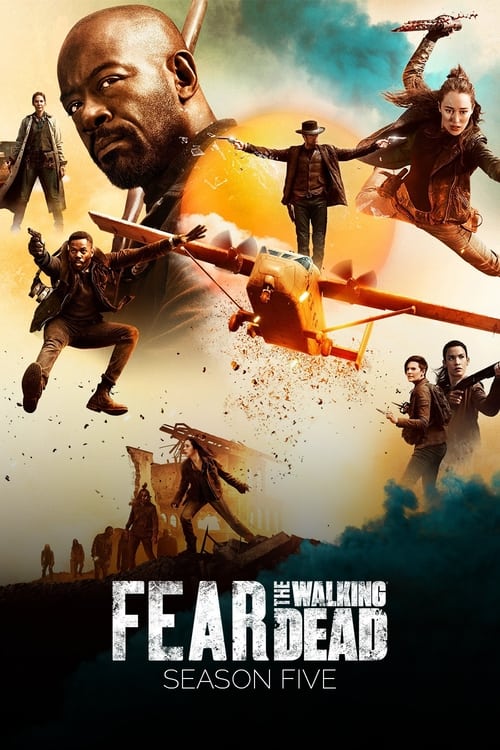
Fear the Walking Dead
Season 5 Analysis
Season Overview
The mission to help others will be put to the ultimate test when our group lands in uncharted territory. They will be forced to face not just their pasts but also their fears, leaving them forever changed.
Season Review
Categorical Breakdown
The plot focuses on a universal moral philosophy of 'helping people' rather than a lecture on race or privilege. The diverse ensemble, including the Black male lead, Morgan, is frequently depicted as incompetent due to illogical writing. Strong Latina and white female heroes are actively reduced and sidelined to secondary roles, contradicting the 'forced diversity' agenda of a high score. Vilification is aimed at pragmatic, ruthless survivalists, who are both male (Logan) and female (Virginia), not specifically 'whiteness' or white males.
The narrative operates as a self-contained moral fable within the post-apocalypse, and the conflict is purely about internal morality versus external threat. There is no plot thread dedicated to criticizing or framing Western civilization or American history as fundamentally corrupt. The focus is on rebuilding human connection, a universal theme, rather than deconstructing national or cultural heritage.
Established heroines like Alicia Clark and Luciana have their character development reversed, with Alicia being reduced to aimless painting, a clear emasculation of her prior leadership role. This weakens the 'Girl Boss' potential for the hero side. However, the season's main antagonist is Virginia, a ruthless female leader of the Pioneers, who embodies the 'Girl Boss' trope as a villain—a woman instantly in charge of a massive, powerful group. The motherhood subplot involving Grace and her child is used to re-center a pro-natalist, hopeful message for the future in the finale.
The season contains explicit LGBTQ+ representation through the established gay male character, Victor Strand, and the introduction of a brief romantic pairing between the lesbian character, Althea, and a female soldier, Isabelle. Dialogue from one of the characters directly minimizes the importance of this identity, stating that labels and social conventions do not matter in the post-apocalypse, which serves as a shield against the 'centering alternative sexualities' aspect of a high score. However, the open display of the queer pairing moves the score above the 'Normative Structure' floor.
The overarching moral code is Morgan's secular devotion to 'helping people,' which acts as a replacement for traditional faith. This philosophy, while arguably naive, functions as a universal, objective 'higher moral law' rather than a subjective or relative one. There is no active anti-theistic subplot or demonization of traditional religious characters or institutions.