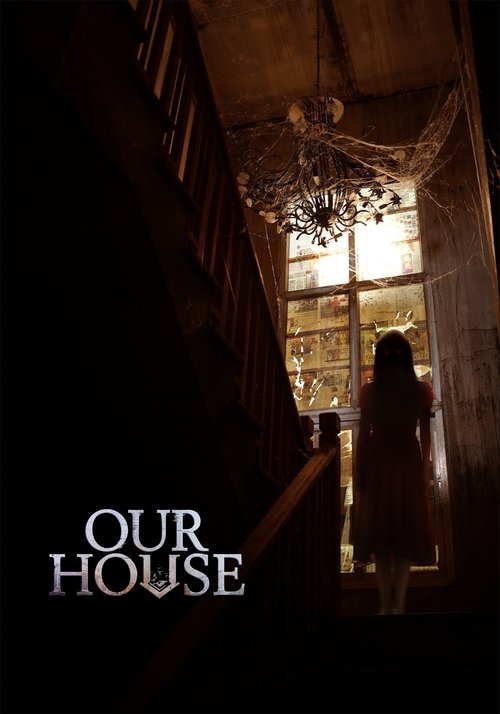
Our House
Plot
A successful sales executive and his pregnant wife find their dream home. But after moving in, strange occurrences begin to happen, while a mysterious connection between the husband and the house next door emerges.
Get the Weekly Woke Watchlist
New and trending movies scored for woke bias, preachy messaging, and forced political themes — before you waste your evening.
No spam. One useful email per week.
Overall Series Review
Categorical Breakdown
The film originates from Thailand, featuring an ethnically and culturally homogenous main cast, which removes the basis for Western-style racial identity politics or the vilification of 'whiteness.' Character conflict centers on the horror elements and personal denial, not on intersectional hierarchy or systemic oppression.
The central premise involves a couple striving to achieve the 'dream home,' demonstrating a desire for sanctuary, stability, and institution. The horror is derived from the corruption of this specific home and the unsettling actions of the neighbors, not from a generalized hostility toward the nation, civilization, or cultural heritage.
The female lead is defined by her role as a 'pregnant wife' and is depicted as the one who suffers a 'psychological burden' from the strange occurrences. This strongly affirms motherhood and the nuclear family as a structure of value. The male lead is a 'successful executive' who is in denial, a common horror archetype, which suggests a character flaw but not explicit emasculation or a 'Girl Boss' trope.
The core relationship is a normative, traditional male-female pairing, and the pregnancy of the wife is a key plot point. The narrative does not feature any centering of alternative sexualities, gender ideology, or deconstruction of the nuclear family.
As a horror film based on a ghost podcast, the plot explicitly acknowledges a spiritual, non-material reality through strange occurrences and neighbor 'rituals.' This engagement with the supernatural and spiritual power is a form of Transcendent Morality, even if the rituals themselves are depicted as sinister or unsettling sources of conflict.
Get the Weekly Woke Watchlist
New and trending movies scored for woke bias, preachy messaging, and forced political themes — before you waste your evening.
No spam. One useful email per week.