Gotham
Season 2 Analysis
Season Overview
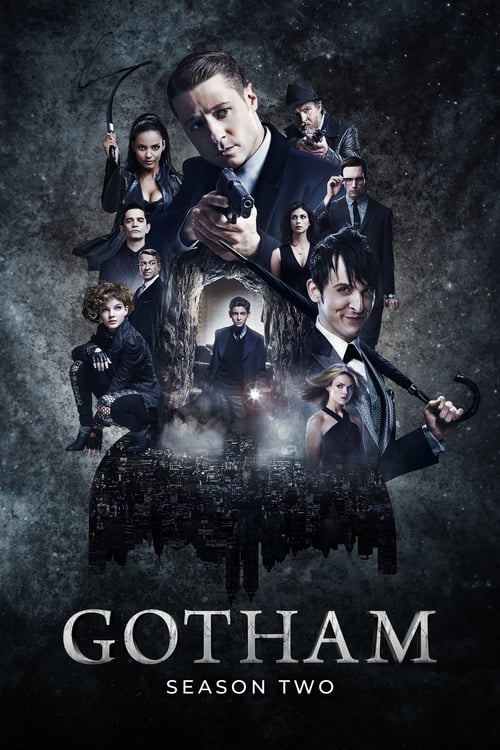
The stakes are higher than ever as Gotham explores the origin stories of some of the most ambitious and depraved Super Villains, including The Riddler, The Joker and Mr. Freeze, and Bruce Wayne uncovers more secrets from his father's past.
Season Review
Categorical Breakdown
The narrative does not lecture on systemic oppression or privilege. Characters of all races are judged by their corrupted soul, fitting a universal meritocracy of villainy. However, the white male protagonist, Jim Gordon, is intentionally framed as a deeply unlikeable, violent killer who is outsmarted by a villain. There is also a noted pattern of characters of color being used as disposable, on-screen victims, which suggests a color-conscious approach to casting for 'redshirts.' The main antagonists and heroes, including Lucius Fox and Hugo Strange (a character of color), are driven by merit/competence, not immutable characteristics.
The central theme is the complete, systemic corruption of Gotham, which is an institution of Western civilization (the American city). This presents a bleak, self-hating view of the home culture as fundamentally corrupt and a breeding ground for nihilism. The institution of law and order, represented by Jim Gordon, is shown to be completely infected and beyond redemption. The city itself is a 'dark world' where villains always win, deconstructing the heroic heritage.
Female characters are not presented as instantly perfect or 'Girl Bosses.' The most prominent female villain characters, Barbara Kean and Tabitha Galavan (Tigress), are explicitly portrayed as psychotic, manipulative, and 'utterly insane.' One storyline involves a villain murdering his girlfriend in a scene described as focusing on the man's point of view, which is the opposite of a 'woke' narrative lens. The primary female protagonist, Lee Thompkins, is defined by her relationship and ethical reaction to the deeply flawed Jim Gordon, rather than a perfect careerist trajectory. This portrayal of women as deeply flawed counters the Mary Sue/Girl Boss trope.
Alternative sexualities are a normalized part of the narrative and are central to prominent characters. Main character Barbara Kean is openly bisexual, and new main character Tabitha Galavan (Tigress) is also bisexual, with the two entering an explicit relationship. This actively centers alternative sexualities in the villain plotlines and normalizes non-traditional relationships among prominent figures, pushing the score high. The narrative does not, however, focus on gender ideology, and the family structure of Bruce Wayne is traditional.
The season is defined by a spiritual and moral vacuum—a focus on 'sin, corruption, and redemption' without explicitly grounding the morality in traditional religion. Theo Galavan's plot to sacrifice Bruce Wayne contains a quasi-religious, cult-like element, but this cult is pagan/historical and is not framed as a critique of modern Christianity. The show avoids outright vilification of traditional faith, instead focusing on a secular nihilism where objective truth (moral law) is abandoned by nearly all characters.