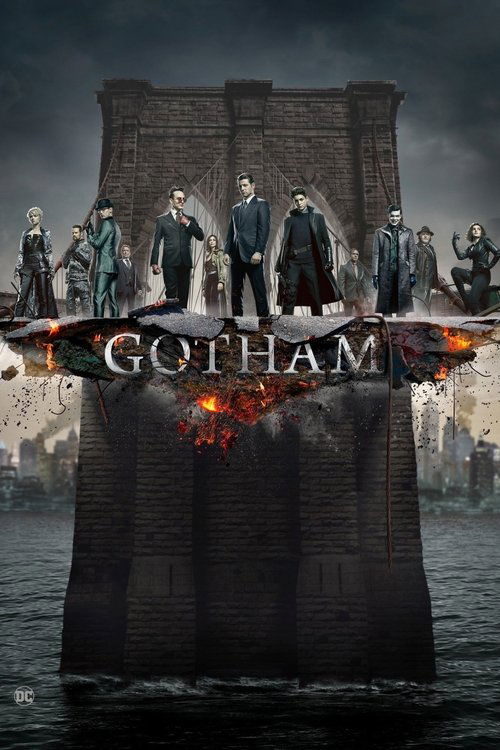
Gotham
Season 5 Analysis
Season Overview
Following the epic events of last season, the Legend of the Dark Knight resumes as Gotham City is divided between Gordon's GCPD jurisdiction and some of the city's most notorious villains. As the city's heroes try to gain control and salvage what's left of the deteriorating city, it teeters between good and evil, even as new villains, including the iconic Bane are introduced.
Season Review
Categorical Breakdown
The narrative's central conflict is a universal struggle of order versus chaos and survival, relying on the moral and physical merit of the characters regardless of their background. The villain Bane is portrayed by a white actor, which some critics note as 'whitewashing' an ethnically-coded comic character. The main antagonist, Nyssa al Ghul, is an Arab character played by a white actress, which may be seen as a 'race-swap' issue, but the plot itself is not focused on identity-based systemic oppression or privilege-lecturing.
The season's core theme is directly counter to Oikophobia. The story is a dramatic representation of Jim Gordon and the GCPD, Bruce Wayne, and even some villains like Penguin and Riddler, standing against both an external U.S. government that has abandoned them and an antagonist (Nyssa al Ghul) who wishes to destroy the city completely. The heroes' mission is one of fierce loyalty and gratitude toward their home and its institutions.
Female characters are highly prominent and powerful. Nyssa al Ghul is the cunning and physically formidable mastermind of the season, a pure example of a 'Girl Boss' villain who even single-handedly defeats Jim Gordon. Barbara Kean is also shown as a morally complex, violent, and powerful figure. However, a major plot point involves Barbara giving birth, and the scene affirms her choice of motherhood and Lee Thompkins' protective support, undercutting the anti-natal message often associated with a 10/10 score.
The core of the narrative focuses on the relationship and parental unit of Jim Gordon and Barbara Kean (parents of the future Batgirl), as well as Jim's relationship with Lee Thompkins. No characters or plotlines center around queer theory, non-traditional gender ideology, or the deconstruction of the nuclear family as oppressive. Sexuality is kept private and not a point of political lecturing.
The conflict is secular, political, and personal (revenge and power). There is no narrative focus on vilifying religion, specifically Christianity, and no religious characters are portrayed as bigots or the root of evil. The moral framework is generally one of objective justice (Gordon, Bruce) fighting chaos and nihilistic destruction (the villains), which aligns with a transcendent morality rather than subjective relativism.