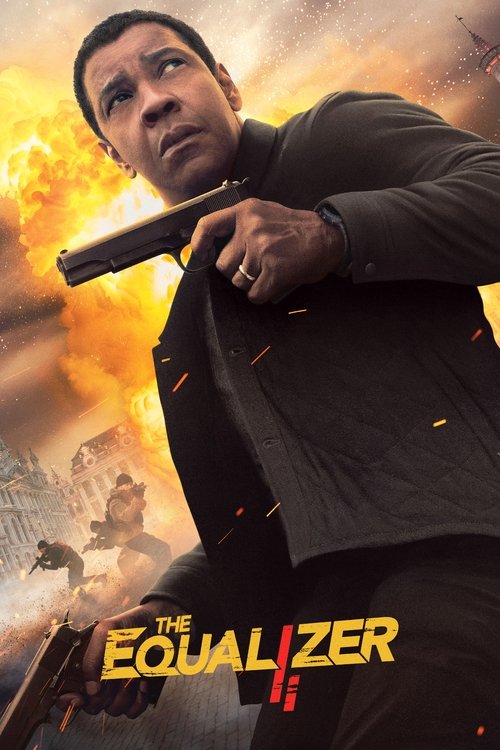
The Equalizer 2
Plot
Robert McCall, who serves an unflinching justice for the exploited and oppressed, embarks on a relentless, globe-trotting quest for vengeance when his former partner is murdered.
Get the Weekly Woke Watchlist
New and trending movies scored for woke bias, preachy messaging, and forced political themes — before you waste your evening.
No spam. One useful email per week.
Overall Series Review
Categorical Breakdown
The hero is a minority, Denzel Washington's Robert McCall, who operates as a colorblind vigilante, administering justice to oppressors regardless of their race or class. His actions benefit people of various ethnic and social backgrounds. The primary villain is a former colleague, which keeps the conflict personal and focused on betrayal rather than systemic group vilification. McCall's mentorship of a young black male from his neighborhood frames the solution as individual uplift and personal discipline, not systemic revolution.
The central villains are corrupt former US intelligence operatives who have gone rogue for profit, creating a critique of corruption within institutions, not a blanket condemnation of the nation or Western civilization itself. McCall, a former Marine and DIA officer, fights to uphold an internal moral code of justice, framing him as a force for good *within* the system's ideals. A minor subplot involves helping a Holocaust survivor retrieve a family painting, honoring historical victims and a segment of Western heritage.
The movie operates within a framework of protective masculinity. McCall's motivation is revenge for his murdered female friend and his protective intervention for a female intern who was abused. The narrative frequently references a masculine code of honor. There are no 'Girl Boss' or 'Mary Sue' characters; the main female figure is a competent professional whose death is the inciting event for the male hero's action. The story structure celebrates the hero's strength and protective role.
The narrative is entirely devoid of any focus on alternative sexual identities, queer theory, or gender ideology. The familial and social structures presented are entirely traditional and normative, serving only as the backdrop for the vigilante action and mentorship subplot. The film does not include any lecturing or deconstruction of the nuclear family.
The core theme of the film is transcendent, objective morality. Robert McCall is depicted as a morally righteous man who serves as judge, jury, and executioner, guided by a personal, unshakeable moral code. The story is an uncompromising battle between clear good and clear evil, directly opposing moral relativism. McCall's persona is often described as a 'warrior monk,' emphasizing a spiritual or moral foundation for his actions.
Get the Weekly Woke Watchlist
New and trending movies scored for woke bias, preachy messaging, and forced political themes — before you waste your evening.
No spam. One useful email per week.