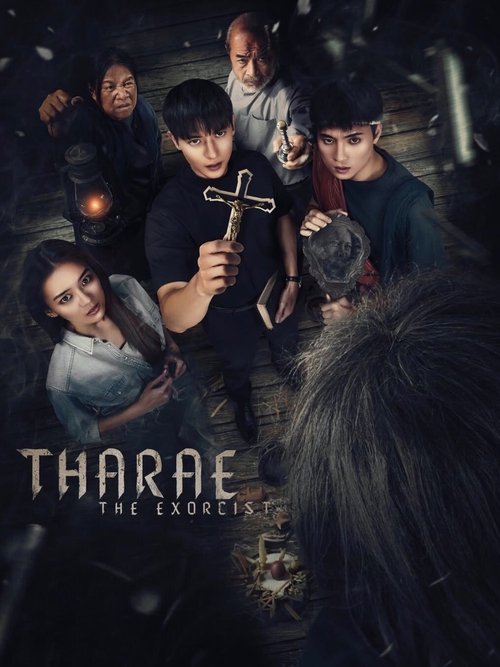
Tharae The Exorcist
Plot
When a vengeful demon resurfaces in Thailand's largest Catholic village, a rigid priest and a maverick shaman must set aside their differences to confront an evil that defies both faith and folklore.
Get the Weekly Woke Watchlist
New and trending movies scored for woke bias, preachy messaging, and forced political themes — before you waste your evening.
No spam. One useful email per week.
Overall Series Review
Categorical Breakdown
The movie is a Thai production about Thai people, set in a specific Thai Catholic village, featuring an all-Thai cast. The conflict is based on clashing spiritual traditions (Catholicism vs. Yao folk religion) within the same indigenous culture, not on race or intersectional hierarchy. Character merit is the sole factor in effectiveness against the demon.
The film does not demonstrate hostility toward its own home or ancestors. The entire story is set within Thailand, respecting the local history of the Catholic community and the indigenous folk traditions. The resolution is the respectful joining of two local belief systems, promoting a form of civilizational acceptance and harmony rather than self-hatred.
The main heroic conflict is centered on the two male leads, the priest and the shaman, who are both portrayed as capable and essential to the exorcism. Female characters like Malee are largely victims of possession or figures of maternal sacrifice and trauma. No elements of the 'Girl Boss' trope, instant female perfection, or anti-natalist messaging are central or apparent in the plot details.
The core plot is a traditional horror narrative. However, some commentary noted a perceived 'suspiciously good' chemistry and subtle hints of 'boy-love' (BL) tension between the two male leads, Father Paolo and Sopha, suggesting a soft, non-explicit nod to centering alternative sexualities through subtext. This is not overt lecturing or deconstruction of the nuclear family.
The movie is not anti-theist, as faith—both Catholic and Yao—is presented as a source of power against the demon. However, it de-centers the Catholic Church's sole authority by portraying its 'rigid dogma' as insufficient on its own against the demon. This syncretic approach suggests objective truth is found only through the union of different belief systems, slightly diminishing the 'Transcendent Morality' of a single traditional faith.
Get the Weekly Woke Watchlist
New and trending movies scored for woke bias, preachy messaging, and forced political themes — before you waste your evening.
No spam. One useful email per week.