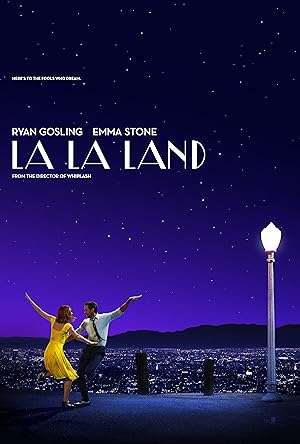
La La Land
Plot
Aspiring actress serves lattes to movie stars in between auditions and jazz musician Sebastian scrapes by playing cocktail-party gigs in dingy bars. But as success mounts, they are faced with decisions that fray the fragile fabric of their love affair, and the dreams they worked so hard to maintain in each other threaten to rip them apart.
Get the Weekly Woke Watchlist
New and trending movies scored for woke bias, preachy messaging, and forced political themes — before you waste your evening.
No spam. One useful email per week.
Overall Series Review
Categorical Breakdown
A white male character is cast as the passionate traditionalist determined to preserve "pure jazz," an art form pioneered by African Americans. The prominent Black character, a band leader, is depicted as a "sellout" who compromises artistic integrity for commercial success by playing pop-fusion music, positioning a white protagonist as the art form's true champion and moral voice. The casting centers a white perspective on a historically Black cultural practice.
The film is an overt celebration of classic American Hollywood and musical cinema, directly referencing and drawing inspiration from classics like *Singin' in the Rain*. The main conflict revolves around Sebastian's desire to preserve a traditional, classic American art form (traditional jazz) against modern commercialization. This functions as a strong expression of gratitude toward cultural heritage.
Sebastian consistently serves as Mia’s artistic guide and teacher, instructing her on classic cinema and suggesting she write her own play, making him the author of many crucial steps in her career arc. The ending shows Mia as a successful actress but also married with a child, while Sebastian is single, dedicating his life solely to his jazz club. The narrative frame suggests Mia's success includes a conventional family structure, while Sebastian's success remains pure artistic fulfillment, which implies a distinct difference in gendered paths to happiness.
The main focus is a traditional male-female romantic relationship. The final act confirms the female lead's adult life includes a traditional nuclear family structure with a husband and child. No alternative sexualities are centered, and no moral lecturing about non-normative gender or family structures is present in the narrative.
The movie's core conflict is entirely focused on artistic integrity versus commercialism, and career ambition versus romantic commitment. There is no commentary, hostile or otherwise, regarding religion, Christian institutions, or an objective moral framework. The narrative acknowledges sacrifice and personal morality in the pursuit of one's dreams.
Get the Weekly Woke Watchlist
New and trending movies scored for woke bias, preachy messaging, and forced political themes — before you waste your evening.
No spam. One useful email per week.