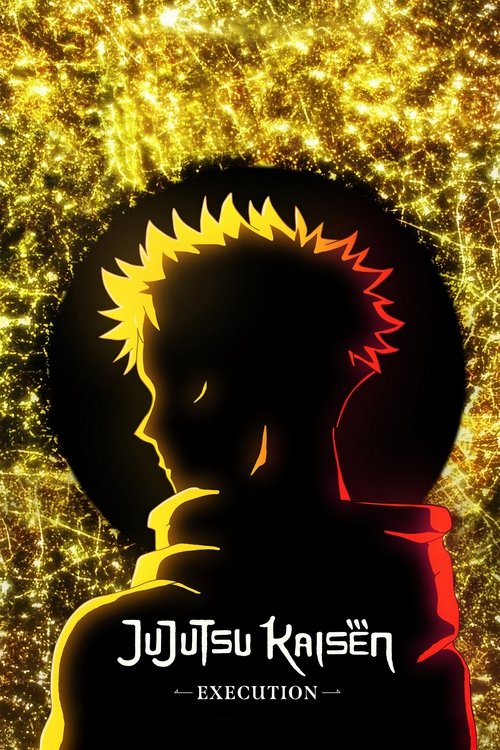
JUJUTSU KAISEN: Execution
Plot
A veil abruptly descends over the busy Shibuya area amid the bustling Halloween crowds, trapping countless civilians inside. Satoru Gojo, the strongest jujutsu sorcerer, steps into the chaos. But lying in wait are curse users and spirits scheming to seal him away. Yuji Itadori, accompanied by his classmates and other top-tier jujutsu sorcerers, enters the fray in an unprecedented clash of curses — the Shibuya Incident. In the aftermath, ten colonies across Japan are transformed into dens of curses in a plan orchestrated by Noritoshi Kamo. As the deadly Culling Game starts, Special Grade sorcerer Yuta Okkotsu is assigned to carry out Yuji's execution for his perceived crimes. A compilation movie of Shibuya Incident including the first two episodes of the Culling Games arc.
Get the Weekly Woke Watchlist
New and trending movies scored for woke bias, preachy messaging, and forced political themes — before you waste your evening.
No spam. One useful email per week.
Overall Series Review
Categorical Breakdown
The narrative's central conflict is a meritocracy challenged by a corrupt, tradition-bound hierarchy, not race or intersectional identity. Characters are judged almost entirely by their innate power and skill as jujutsu sorcerers. There is no focus on 'whiteness' or forced diversity, as the cast is ethnically homogeneous for the setting. The system's corruption is based on class and bloodline within the fictional sorcerer world, not a broader identity critique.
The plot heavily involves the systemic failure of the fictional sorcerer-based 'Jujutsu Society,' portraying the highest authority as incompetent, reactionary, and corrupt for the sake of maintaining a rigid, old-world status quo. The primary conflict of the series is a fight *against* this established, oppressive governing body in their own homeland. This positions the traditional governing 'home' structure as fundamentally broken and worthy of being overthrown or destroyed, leaning toward a critique of institutional heritage.
The series strongly features a critique of the fictional system’s deep-seated patriarchy. Multiple female characters are powerful combatants whose arcs are defined by struggling against the inherent sexism of the conservative sorcerer clans and the general Jujutsu Society. Characters engage in explicit discussions about the misogyny of their world, and key female characters like Maki Zenin commit to dismantling the entire oppressive, male-dominated family structure, which is framed as a necessary, victorious act.
The core plot, themes, and conflicts do not involve any discourse on alternative sexualities, gender ideology, or deconstruction of the nuclear family. Traditional male-female pairing is not a primary topic, and sexuality itself is not centered or lectured upon. The story remains squarely focused on the universal battle for survival and moral philosophy.
The corrupt authority of the 'Jujutsu Society' is often presented with imagery that mirrors organized religion and monotheistic authority, especially with the sealing of the god-like figure, Satoru Gojo. The antagonists are driven by a desire to usher in a new, chaotic evolution of humanity, which questions the moral and existential foundations of the existing world. However, the protagonist's entire motivation is rooted in a clear, transcendent moral desire to help and save others from an objective evil, balancing the critique of the failed institution.
Get the Weekly Woke Watchlist
New and trending movies scored for woke bias, preachy messaging, and forced political themes — before you waste your evening.
No spam. One useful email per week.