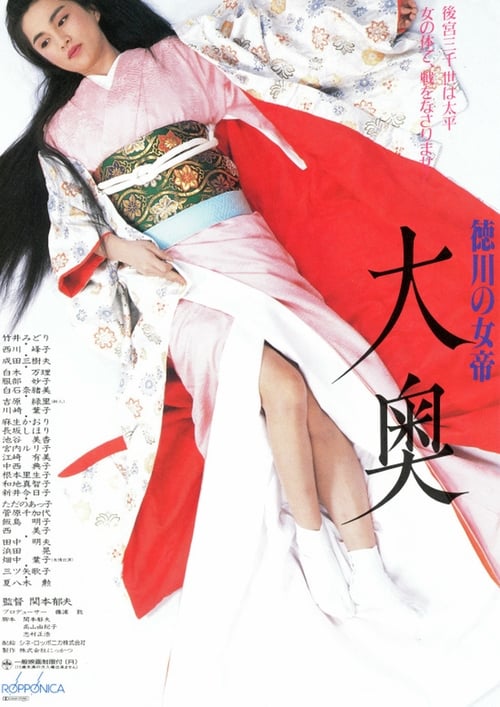
Ooku: Empress of the Tokugawa
Plot
Get the Weekly Woke Watchlist
New and trending movies scored for woke bias, preachy messaging, and forced political themes — before you waste your evening.
No spam. One useful email per week.
Overall Series Review
Categorical Breakdown
The film is set in historical Japan and deals exclusively with Japanese characters and their internal class/social hierarchy. Modern race-based intersectional identity politics or commentary on 'whiteness' are absent, as are forced insertions of diversity.
The story's conflicts revolve around the power structure and institutional flaws of the Edo-period Japanese shogunate. This is an internal cultural critique of a specific Japanese system, not an expression of hostility or self-hatred toward Western civilization or its ancestors.
The drama is defined by intelligent, high-agency female characters who are masters of political intrigue and court maneuvering. While this could be interpreted as a proto-'Girl Boss' narrative, the entire institution of the Ooku exists to promote motherhood and secure the male Shogunal lineage, which runs counter to anti-natalist messaging. The women's struggles are authentic to their historical constraints, not 'perfect instant heroines.'
The central dramatic function of the Ooku is dynastic—securing the Shogun's heir—making the traditional male-female pairing the core normative structure. Any potential depiction of non-heterosexual relationships would be a dramatic element of female confinement and hierarchy, not a political lecture on modern gender ideology or an attempt to deconstruct the nuclear family.
The plot is focused on secular political and sexual power struggles within a non-Western, feudal setting. The film neither contains hostility toward Christianity nor promotes an explicitly anti-theistic, subjective moral relativism. The conflicts are worldly and power-based.
Get the Weekly Woke Watchlist
New and trending movies scored for woke bias, preachy messaging, and forced political themes — before you waste your evening.
No spam. One useful email per week.