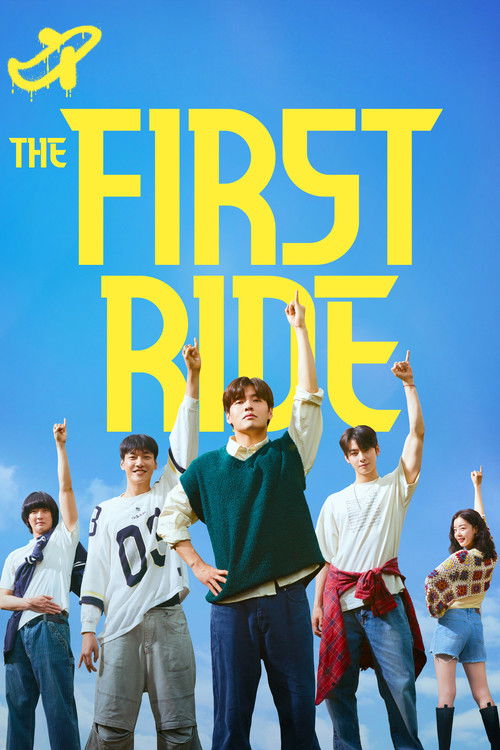
The First Ride
Plot
Four lifelong friends—Tae-jeong, Do-jin, Yeon-min, and Geum-bok—dreamed of an epic trip abroad, but life got in the way. Years later, older but not necessarily wiser, they finally embark on their long-overdue journey. Planned as a carefree getaway, however, the trip derails into a whirlwind of unexpected chaos, hilariously absurd detours, and buried emotions resurfacing. As they stumble through misadventures, their first ride together turns into a spectacular journey—one for the ages.
Get the Weekly Woke Watchlist
New and trending movies scored for woke bias, preachy messaging, and forced political themes — before you waste your evening.
No spam. One useful email per week.
Overall Series Review
Categorical Breakdown
The film is a South Korean production about Korean characters. The plot judges characters based on their individual personalities (perfectionist, aspiring DJ, former athlete, religious friend) and personal experiences, such as career-ending injury or trauma. The narrative does not utilize an intersectional lens, nor does it lecture on systemic oppression, privilege, or vilify any race. Casting is authentic to the setting and story.
The central themes are the struggles of adult life, deep friendship, and the value of shared experiences. There is no suggestion that the friends' home culture or their own heritage is fundamentally flawed, corrupt, or racist. The journey abroad acts as a catalyst for personal reckoning, but the humor and drama stem from the universal nature of their misadventures and emotional issues, not from deconstructing their civilization.
The main cast and focus are male friendships. The primary female character, Ok-shim, is a constant, uninvited presence who pursues one of the male leads, Tae-jung. This portrayal includes elements of being a 'sad mascot' and a 'psycho stalker,' which is a negative but traditional comedic dynamic of persistent affection, not a depiction of a flawless 'Girl Boss' or a Mary Sue. The plot is not focused on emasculating the men, who are instead shown dealing with significant emotional struggles and loss. The film avoids anti-natalist messaging.
The narrative centers on the bonds between four male friends and the romantic subplot involving one of them and a female character, Ok-shim, along with another female interest, Sylvia. The structure is entirely normative, focusing on traditional male-female pairing in its limited romantic subplots. There is no centering of alternative sexualities or introduction of gender ideology themes.
One of the main protagonists, Geum-bok, is specifically noted as coming from a religious family and turning to religion from an early age, making faith a defining character trait. While one humorous moment involves an evangelical quote, the film is a comedy/drama about friendship and loss. It does not frame traditional religion as the root of evil or depict religious characters as bigots. The moral framework appears to be rooted in universal human experience rather than an explicit attack on higher moral law.
Get the Weekly Woke Watchlist
New and trending movies scored for woke bias, preachy messaging, and forced political themes — before you waste your evening.
No spam. One useful email per week.