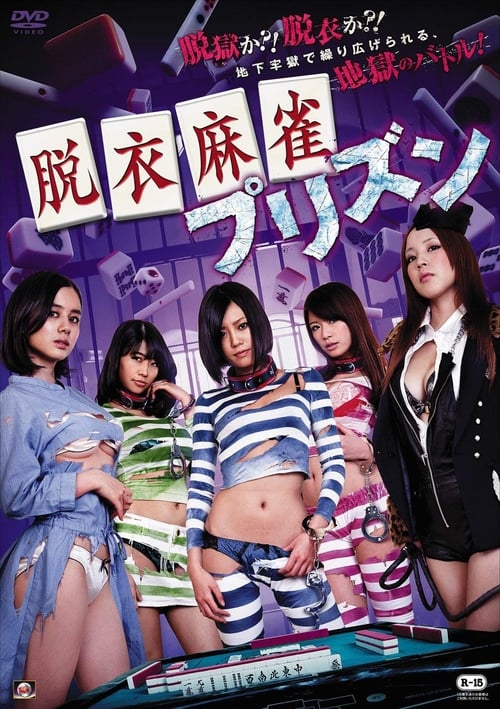
Strip Mahjong: Prison
Plot
Welcome to a female prison in a dark society in which prisoners are ruled by sexual pressure. The new inmate Marina has been severely harassed by Iona in her cell and sadistic guard Natasha. One day she tries to jailbreak with the mysterious prisoner Kaede and others, but fails unfortunately. Anyone trying to escape from prison in this prison is immediately sentenced to death. However, only those who survive the forbidden game, "Unlimited Strip Mahjong", can escape the punishment. Marina and the others start a game of Mahjong to save their lives...
Get the Weekly Woke Watchlist
New and trending movies scored for woke bias, preachy messaging, and forced political themes — before you waste your evening.
No spam. One useful email per week.
Overall Series Review
Categorical Breakdown
Characters are judged by their ability to survive or their position of authority within the prison hierarchy. There is no evidence that the narrative relies on intersectional race or ethnic-based identity politics. No vilification of 'whiteness' or forced insertion of race-based diversity is present in the plot structure.
The film's setting is a fictional 'dark society' and a corrupt prison institution. The criticism is directed at this specific, extreme dystopian system and its cruelty. There is no deconstruction or hostility directed toward any real-world Western civilization, home culture, or ancestral heritage.
The plot's focus on women as victims of 'sexual pressure' and physical abuse within the prison is the inverse of the 'Girl Boss' trope. Female characters are subjected to the system and not depicted as instantly perfect or career-driven. The portrayal of women is one of exploitation, which directly counters the modern 'woke' feminist agenda's emphasis on female perfection and empowerment.
The narrative's central themes of 'sexual pressure' and sadism are elements of institutional and personal oppression within a prison setting. The story does not center alternative sexualities as a primary character trait, nor does it lecture on queer theory or deconstruct the nuclear family structure. Sexuality is depicted as a tool of power and torment.
The plot focuses entirely on immediate, physical, and carceral conflicts. There are no religious themes present, no hostility directed toward Christianity or any traditional religion, and no explicit philosophical push for moral relativism. The dark morality is a function of the prison's institutional sadism, not a critique of faith.
Get the Weekly Woke Watchlist
New and trending movies scored for woke bias, preachy messaging, and forced political themes — before you waste your evening.
No spam. One useful email per week.