Alas Roban
Plot
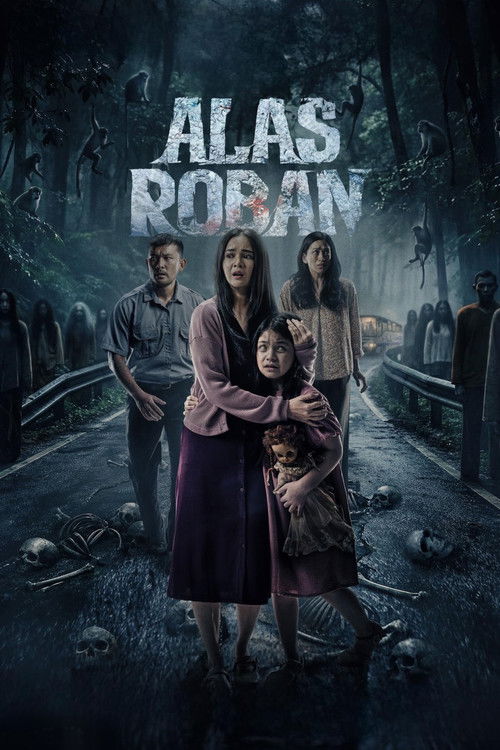
The lives of Sita and her daughter, Gendis, change after a terrifying night. Their journey through Alas Roban is filled with fear and relentless terror. Can they uncover what's happening there?
Get the Weekly Woke Watchlist
New and trending movies scored for woke bias, preachy messaging, and forced political themes — before you waste your evening.
No spam. One useful email per week.
Overall Series Review
Categorical Breakdown
The movie is an Indonesian production with an entirely local cast and a plot focused on Javanese urban legends and the peril of a mother and daughter. Race is authentic to the regional story and is not a factor in the conflict. Character actions are driven by the supernatural mystery and the bonds of family, not by intersectional hierarchy or lectures on privilege.
The film explores and validates local myths, rituals, and the 'legendary' nature of the Alas Roban road. A subtle social critique exists against modernization that ignores tradition, suggesting the local culture has depth that must be respected. The source of the terror stems from a 'janji ritual lama' (old ritual promise) and the actions of ancestors, which is a critique of past cultural mistakes, but the film ultimately reinforces the power and significance of local spiritual heritage.
The core of the story is the fierce, unconditional, and protective love of a single mother, Sita, for her daughter, Gendis. This maternal self-sacrifice drives all the action and is depicted as the ultimate source of strength and resolve. The narrative celebrates the mother-child bond and frames motherhood as the central, vital role, which is contrary to anti-natalist or 'career is the only fulfillment' messaging.
The narrative makes no mention of centering alternative sexualities, deconstructing the nuclear family, or discussing gender ideology. The focus is solely on a spiritual horror plot revolving around a traditional mother-daughter pairing and local myths.
The entire horror plot is predicated on the power, reality, and consequence of the spiritual realm. The conflict involves mystical possession, ancient rituals, and a vengeful spirit, which is a powerful acknowledgment of a transcendent, non-materialist order. Faith and spiritual traditions, even local and pre-modern ones, are the mechanics of the story, not the root of evil.
Get the Weekly Woke Watchlist
New and trending movies scored for woke bias, preachy messaging, and forced political themes — before you waste your evening.
No spam. One useful email per week.