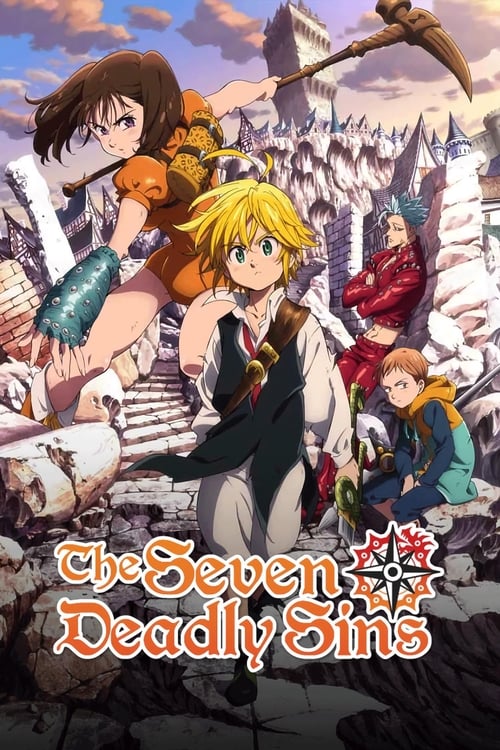
The Seven Deadly Sins
Season 1 Analysis
Season Overview
Elizabeth Liones' search for the Seven Deadly Sins started ten years after their rumored coup d'état. While villagers thought of it to be a myth, Elizabeth came to search for them anyway in order to rescue the king (her father) and the rest of the royal family who were imprisoned by the Holy Knights.
Season Review
Categorical Breakdown
Characters are judged solely by their immense power, true nature, and actions for redemption, which aligns with universal meritocracy. The main cast includes humans and various fantasy races (Giant, Fairy, Demon) with power based on their own merits and bloodlines, not modern intersectional hierarchy. The story is a straightforward good vs. evil conflict where labels are misleading, eliminating the focus on real-world race or 'whiteness' vilification.
The central conflict is the princess and the exiled knights trying to *save* the Kingdom of Liones and restore the rightful, benevolent King from the coup staged by the corrupt Holy Knights. The story is not an attack on the civilization's foundational culture, but a specific criticism of institutional corruption and tyranny within the existing kingdom's governing body.
Female characters like Diane and Merlin are immensely powerful and vital to the team's success, preventing a 'men are bumbling idiots' scenario. However, the male protagonist, Meliodas, routinely subjects Elizabeth to gratuitous and unpunished sexual harassment and groping. This highly traditional, non-woke shonen ecchi trope runs directly counter to modern feminist demands for female autonomy and respect, placing the content far from the 'Girl Boss' end of the scale.
The narrative focuses entirely on traditional male-female pairings, albeit with highly unusual and often problematic age/immortality dynamics. No characters' identities are centered around alternative sexualities, nor does the plot engage with or lecture on gender theory or the deconstruction of the nuclear family. Sexuality is largely private or used for traditional fan service.
The core premise uses Christian concepts (Seven Deadly Sins, Holy Knights) as fantasy branding. The Holy Knights, a religious-themed military institution, are the primary corrupt antagonists who betray the kingdom, which functions as a critique of power dressed in 'holiness.' However, the overarching theme of *redemption* for the titular Sins acknowledges an objective moral law, preventing it from being a total vilification of faith or embrace of subjective relativism.