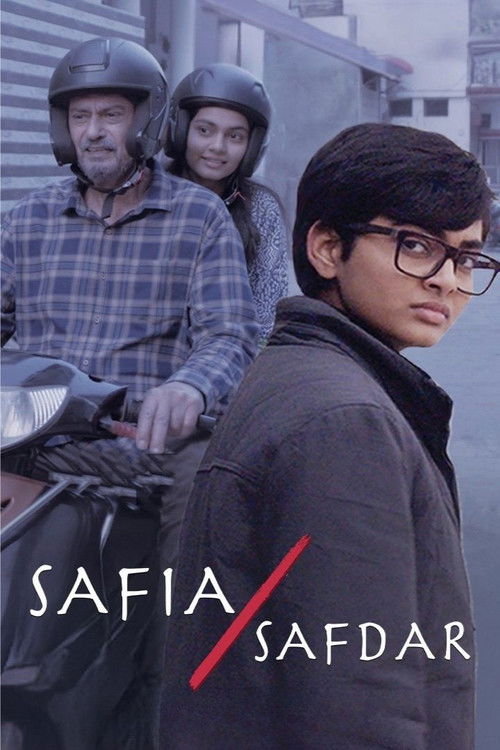
Safia/Safdar
Plot
When Salman falls ill, his saloon is at stake as the local moneylender wants it. The only person standing in the way is Salman's daughter, Safia. Will she be able to keep the salon running as Safdar?
Get the Weekly Woke Watchlist
New and trending movies scored for woke bias, preachy messaging, and forced political themes — before you waste your evening.
No spam. One useful email per week.
Overall Series Review
Categorical Breakdown
The plot centers entirely on the struggle of an individual against a systemic barrier (patriarchy in a working-class community). The narrative highlights gender as the primary immutable characteristic that determines the protagonist's ability to earn a living and succeed, which necessitates her disguise. The story's central purpose is a direct challenge to the idea that a person of female gender lacks the merit or capability for a traditional male role.
The conflict is one of social critique *within* a local culture. The narrative focuses on protecting the family's home and livelihood against an internal threat (a moneylender and a restrictive local social norm). The home culture is not framed as fundamentally corrupt or racist in a civilizational self-hatred sense; it is specifically a critique of a localized patriarchal custom, which registers as moderate social criticism rather than wholesale civilizational rejection.
Safia is an instantly capable and intelligent lead who solves a problem that no male character (father is sick, antagonist is evil) can. She is a 'Girl Boss' figure whose competence allows her to rescue the family business. She successfully takes over the male-dominated sphere of the barbershop, and a secondary plot thread suggests a path toward becoming a successful songwriter. The movie uses the emasculation of the father (illness) to propel the female character into action, directly challenging restrictive gender roles.
The use of a male identity ('Safdar') is a strategic disguise for economic necessity, not an expression of gender identity or a deconstruction of biological reality. The goal is to save the nuclear family's business. While the premise involves cross-dressing, the motivation is purely survival, keeping the focus away from queer theory or centering alternative sexualities as a primary theme.
The conflict is purely economic and social, involving a dispute over a debt and a challenge to a local social custom. The narrative offers no scenes of hostility towards religion and does not feature religious characters as villains or bigots. The morality of the protagonist (saving her family) is presented as an objective good, driven by sacrifice, indicating an acknowledgment of higher moral duties.
Get the Weekly Woke Watchlist
New and trending movies scored for woke bias, preachy messaging, and forced political themes — before you waste your evening.
No spam. One useful email per week.