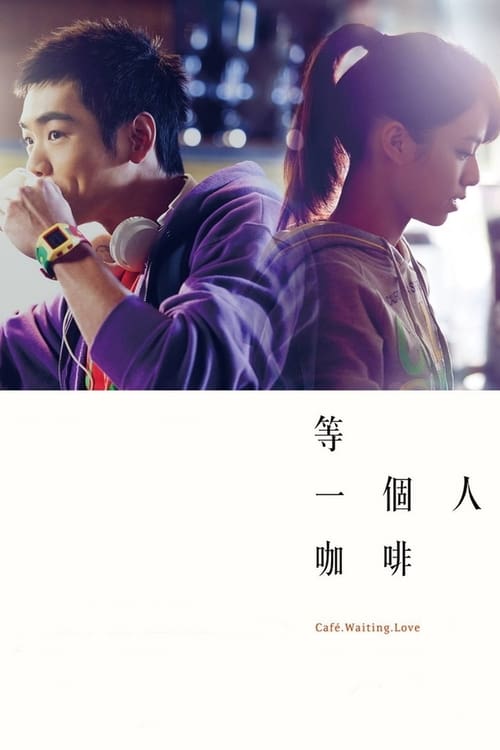
Café. Waiting. Love
Plot
College freshman Si-ying gets a part-time job at “Cafe. Waiting. Love” coffee shop, where she befriends Abusi, a tomboyish barista who can make any coffee the customers request, the beautiful and mysterious cafe owner, and Zeyu, the boy who always sits in the same spot in the cafe who seems to be very popular with girls and on whom Si-ying develops an instant crush.
Get the Weekly Woke Watchlist
New and trending movies scored for woke bias, preachy messaging, and forced political themes — before you waste your evening.
No spam. One useful email per week.
Overall Series Review
Categorical Breakdown
The film is a product of Taiwanese cinema with an ethnically authentic East Asian cast and setting. The narrative judges characters, such as the two male leads, based entirely on their unique personalities, kindness, and sincerity rather than on immutable characteristics or group identity. There is no trace of 'vilification of whiteness' or political lecturing on privilege.
The movie is set in a local Taiwanese environment and embraces its cultural setting, showcasing Taiwan's vibrant scenery and local humor, including local Hokkien comedy, which promotes a positive sense of 'home.' Core institutions or cultural traditions are not framed as corrupt or racist; instead, the film celebrates local life and community.
Si-ying, the female lead, is strong-minded and confident, impressing others by standing up for a friend, but she is not presented as an infallible 'Mary Sue.' The male lead, A-Tuo, is a genuinely kind, hardworking, and 'super-excellent guy,' countering the stereotype of the 'bumbling idiot' male. The depiction of a cafe owner's long-term grief over a lost male partner and the central focus on finding a sincere romantic partner suggest a valuation of relationships over an 'anti-natalist/career is the only fulfillment' message. This score is moderate, reflecting a modern, confident female protagonist who is still primarily defined by her romantic journey.
The character Abusi is explicitly a 'tomboy lesbian' barista, and her sexual identity is a clear part of her established character, including her past relationship. This inclusion 'subtly challenges societal norms' and represents a non-normative structure. The high score reflects the presence of an out lesbian character and her romantic plot point, but it avoids the highest score as the film's main romance remains a traditional male-female pairing and there is no focus on gender ideology or deconstruction of the nuclear family.
The movie embraces fantastical and surreal elements, including a deceased grandfather's prophecy and a character with magical abilities, which introduces a transcendent, fate-driven element to the narrative. The story is a quest for destiny and true love. This is not anti-theism; however, since the film replaces traditional organized 'faith' or 'objective moral law' with a more mystical, fated romanticism and 'magic,' it is not a pure 1/10 for Transcendent Morality, but rather a moderate score that indicates a spiritual vacuum filled by magical realism.
Get the Weekly Woke Watchlist
New and trending movies scored for woke bias, preachy messaging, and forced political themes — before you waste your evening.
No spam. One useful email per week.