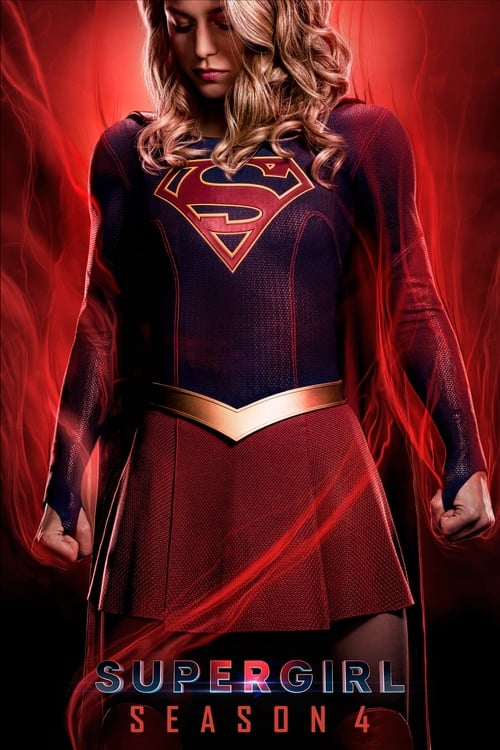
Supergirl
Season 4 Analysis
Season Overview
In season four, Supergirl is facing a bigger threat than she's ever faced before – a new wave of anti-alien sentiment, spreading across National City that’s fomented by Agent Liberty. As Kara mentors a new reporter at CatCo, Nia Nal, and tries to use the power of the press to shine a light on the issues threatening to tear the city apart, Supergirl takes to the skies to battle the many villains who rise up in this era of divisiveness.
Season Review
Categorical Breakdown
The plot is entirely constructed as a lecture on systemic oppression, with the alien population representing an oppressed class and the main villain, Agent Liberty, acting as the caricature of white human supremacy and nationalist prejudice. The narrative frame explicitly dictates that 'human first' ideology is the source of all evil and hate. The show focuses heavily on the immutable characteristic of 'alienness' as a stand-in for race/identity.
The central conflict frames the desire of the 'Children of Liberty' to prioritize the rights of human citizens and reclaim control of their home planet as a fundamentally bigoted, hateful, and 'vile' ideology. This positions the dominant culture and traditional ideas of national sovereignty as the villainous force, while the alien-refugee 'other' is portrayed as morally superior and deserving of a home, fulfilling the 'Home culture framed as fundamentally corrupt/racist' trope.
Supergirl and the primary female cast members (Alex Danvers, Lena Luthor, Nia Nal) are all instantly highly competent, powerful, and occupy positions of top leadership (Supergirl/Hero, DEO Director, CEO/Scientist, New Superhero). The male primary antagonist, Agent Liberty, is depicted as a toxic, misguided former professor who succumbs to hate. The narrative maximizes the 'Girl Boss' trope, showing women as the only truly effective moral and physical forces.
The season introduces Nia Nal (Dreamer), the first transgender superhero in mainstream media, whose transgender identity is a key feature of her arc and is explicitly discussed in relation to her inherited powers, which are matrilineally passed down. This places sexual and gender identity at the center of a hero's origin and validates gender ideology within the narrative structure.
There is no overt vilification of traditional religion, such as Christianity, in the central conflict. However, the season's entire moral framework is based on social and political power dynamics—fighting 'hatred' and 'prejudice'—which aligns with moral relativism over any transcendent, objective moral law.