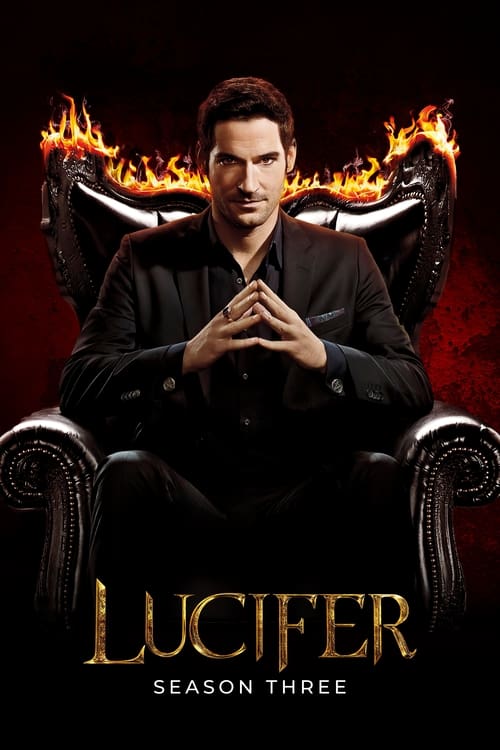
Lucifer
Season 3 Analysis
Season Overview
As Lucifer struggles with an identity crisis, a gruff new police lieutenant shakes up the status quo with Chloe and the rest of the LAPD.
Season Review
Categorical Breakdown
The narrative does not primarily rely on race or intersectional hierarchy; character worth is measured by individual 'soul' and moral choices, regardless of celestial or human background. The main struggle is Lucifer's personal journey of self-actualization, which is a universal, character-merit based conflict. The cast is diverse, but this is presented as a neutral fact of the LA setting without political lecturing on systemic oppression or privilege.
The show is not fundamentally hostile to Western civilization, but rather to the traditional, patriarchal celestial hierarchy (Heaven/God), which is framed as oppressive and manipulative. Lucifer, the lead, is a former authority figure who rejects his divine home and 'job,' choosing a hedonistic life in Los Angeles. This choice subtly privileges the freedom of a secular, Western metropolis over the traditional authority of the celestial order, giving it a moderate score.
The main female protagonist, Chloe Decker, has her professional competence and independence sidelined by a protracted love triangle plot with two male characters (Lucifer and Pierce), causing her character to regress and act like a 'hormonal teenager' in her romantic decisions. The male lead (Lucifer) is often depicted as self-centered and emotionally immature. While other female characters like Dr. Linda Martin (psychologist) and Ella Lopez (forensics expert) remain competent professionals, the primary female lead's arc is centered around a man. Maze, a female demon, is powerful but spends the season driven by emotional betrayal and lashing out, rather than rising as a perfect 'Girl Boss.'
The main character, Lucifer, is openly and canonically bisexual/pansexual, as is his demon ally, Mazikeen, which normalizes alternative sexualities. Lucifer's sexuality is generally presented in a highly promiscuous, hedonistic context, which is tied to his identity as the Devil/Lightbringer. While the nuclear family of Chloe and her ex-husband Dan is not explicitly vilified, the presence of openly non-heterosexual celestial beings and demons elevates the importance of sexual freedom as a moral good, placing it well above the 'Normative Structure' score.
The show's entire premise is a radical inversion of Christian theology. God is explicitly portrayed as a distant, manipulative father-figure, while the Devil (Lucifer) is a sympathetic, misunderstood protagonist seeking justice and freedom from his father's tyranny. Hell is redefined as a place of self-actualized psychological guilt, not eternal damnation decreed by God. The major antagonist, Cain (Pierce), is a biblical figure who represents sin and a desire to escape God's punishment, further emphasizing an anti-biblical theological framework. The show embraces subjective, individualistic morality and rejects the concept of objective, transcendent moral law laid down by a divine authority.