Lucifer
Season 4 Analysis
Season Overview
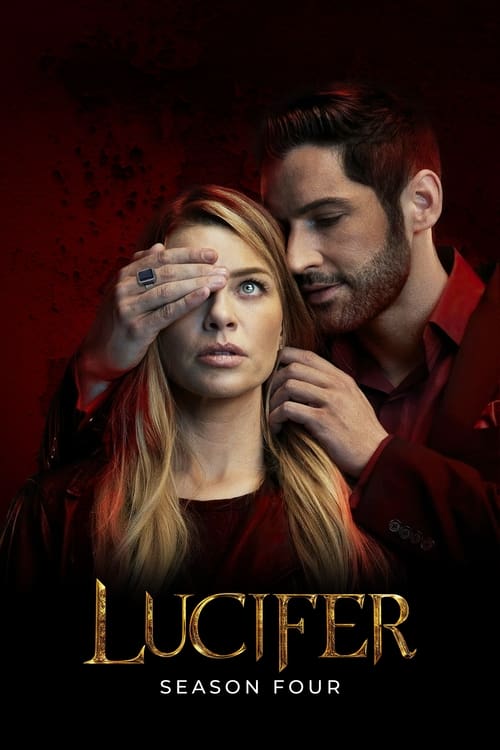
As Chloe struggles to come to terms with Lucifer's disturbing revelation, a rogue priest sets out to stop a long-rumored prophecy.
Season Review
Categorical Breakdown
A central subplot focuses on the angel Amenadiel dealing with the harsh reality of racial inequality and profiling as he prepares to raise a child on Earth. He is shown mentoring a young Black man who is a victim of gun violence, with the narrative explicitly framing the death as a consequence of systemic issues, making race a primary factor in the character's journey and life choices. The arc relies heavily on a discourse of systemic oppression rather than universal human struggle. The character Amenadiel, an angel, is race-swapped from his traditional comic book depiction.
The main antagonist is Father Kinley, a Catholic priest who represents a traditional Western religious institution. The character is portrayed as a delusional, murderous zealot whose desire to protect 'humanity' leads him to manipulation and violence. His actions frame traditional Western religious heritage as fundamentally corrupt and a source of chaos, contrasting with Lucifer, the Devil, who is seeking goodness. Amenadiel's storyline critiques the 'home' culture of Los Angeles for its inherent racism and profiling against people of color.
Female leads like Chloe, Linda, and Maze are strong, complex, and highly competent. The arrival of Eve as an independent, sexually liberated character who knows what she wants provides a complication to the core relationship, but she is never positioned as a perfect, flawless 'Mary Sue.' Linda's pregnancy is introduced, and both she and Amenadiel embrace the responsibilities of motherhood and fatherhood, which explicitly runs counter to an anti-natalist message. The men are generally not bumbling idiots, but flawed, complex heroes (Lucifer, Amenadiel) and men struggling with grief (Dan).
The demon Maze enters into a romantic and sexual relationship with Eve, the first woman, making a non-traditional, alternative sexuality pairing a significant emotional and plot-driving dynamic for a main character. Lucifer's own bisexuality is an established and normalized facet of his character. The narrative casually centers alternative sexual identities without specific lecturing, treating non-normative pairings as standard.
The core conflict of the season is driven by the primary antagonist, Father Kinley, a representative of organized Christian religion. Kinley is depicted as a man of faith whose rigid adherence to prophecy and traditional dogma about the Devil makes him a dangerous, manipulative villain. This positions traditional religion as the root of bigotry, fear, and evil actions. The story continually elevates the subjective, self-actualizing moral journey of Lucifer over the objective, higher moral law represented by the faith-based antagonist.