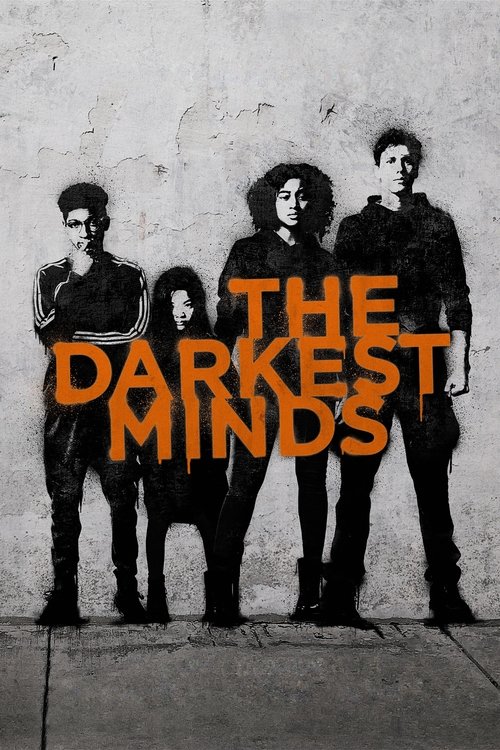
The Darkest Minds
Plot
After a disease kills 98% of America's children, the surviving 2% develop superpowers and are placed in internment camps. A 16-year-old girl escapes her camp and joins a group of other teens on the run from the government.
Get the Weekly Woke Watchlist
New and trending movies scored for woke bias, preachy messaging, and forced political themes — before you waste your evening.
No spam. One useful email per week.
Overall Series Review
Categorical Breakdown
The premise is a thinly veiled allegory for identity-based oppression, where children are persecuted, separated from their families, and segregated into camps based on an immutable characteristic: their superhuman abilities, which are color-coded (Orange being the most feared and powerful). The casting of a Black actress in the lead role, which the actress publicly framed as a deliberate corrective to the lack of diversity in the genre, foregrounds race-as-representation. The primary conflict is an intersectional hierarchy of powers, where the most oppressed (Red and Orange) are the most powerful, and the white male primary antagonist (the President's son) is shown to be a manipulative, powerful villain controlling the system.
The movie earns a high score by painting the United States government and its institutions as the central evil. A dystopia is established where the American state is corrupt, authoritarian, and actively detains children in brutal labor camps, tearing families apart. The narrative champions 'radical anti-government' sentiment and the protagonists are working to dismantle the established civilization to create a separate, utopian, communal society run by children. The story’s main message is that the 'adult' society and its institutions are fundamentally corrupt and must be overthrown by the youth.
The protagonist, Ruby, is the most powerful character in the story (Orange: mind control/telepathy) and is ultimately the 'Chosen One' who faces off against the primary male villain. This firmly establishes the 'Girl Boss' trope, where the female lead is the key to the revolution. The main male lead, Liam, is a brave leader, but Ruby's power is what drives the climactic events. Her early familial experience is negative, as her parents fear her power, though this is primarily driven by the dystopian context, preventing the score from reaching the highest levels of anti-natalism.
The main romantic dynamic is a traditional male-female pairing between Ruby and Liam. There is no significant plot focus on alternative sexualities, gender ideology, or the deconstruction of the nuclear family beyond the premise of the government separating children from their parents.
There is no direct, explicit hostility towards Christianity or organized religion. The central conflict is political and secular, pitting the super-powered youth against the oppressive adult government and scientific establishment. The primary moral theme is a rebellion against an objective oppression, rather than an embrace of 'moral relativism' over a faith-based moral code. The lack of a spiritual element in the dystopian conflict keeps the score moderate, reflecting the inherent spiritual vacuum in a purely political/secular resistance movement.
Get the Weekly Woke Watchlist
New and trending movies scored for woke bias, preachy messaging, and forced political themes — before you waste your evening.
No spam. One useful email per week.