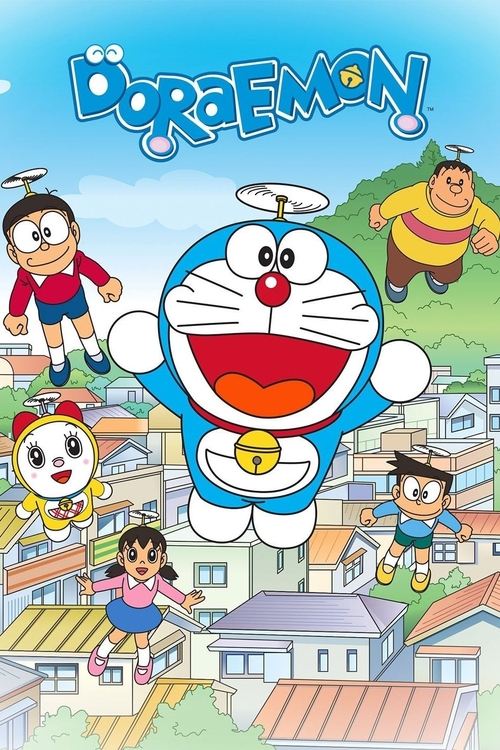
Doraemon
Season 1 Analysis
Season Overview
No specific overview for this season.
Season Review
Categorical Breakdown
Characters are all ethnically uniform, and the core conflict focuses entirely on individual character merit and ethics, such as Nobita's laziness versus his kind-hearted nature, rather than race or immutable characteristics. There is no political lecturing or forced diversity.
The series is a celebration of the childhood home and local community setting in Japan. The narrative explicitly promotes ethical values, family, and respect. Nobita's goal is to improve his family's future, showing a respect for heritage, not hostility toward it.
The main female character, Shizuka, is intelligent, kind, and positioned as the love interest and prospective wife of the male lead, supporting a traditional pairing. While the male lead, Nobita, is portrayed as consistently incompetent and a bumbling idiot, a central comedic device, Shizuka is not a perfect 'Girl Boss' and is shown doing chores and practicing piano to satisfy her mother, demonstrating a complementary, non-Mary Sue character design.
The narrative centers on a normative structure, with the entire premise revolving around the necessity of Nobita improving himself to successfully marry his best female friend, Shizuka, thus establishing the nuclear family as the positive endpoint. Sexual identity or alternative lifestyles are not present or addressed, maintaining a private and traditional focus.
The series operates entirely on a foundation of clear, transcendent morality where character actions have immediate, often gadget-induced, consequences. Bad behavior (dishonesty, laziness) is always punished through comedy, and positive traits (courage, integrity) are rewarded. The narrative is a series of ethical parables, not anti-religious or pro-moral-relativism propaganda.