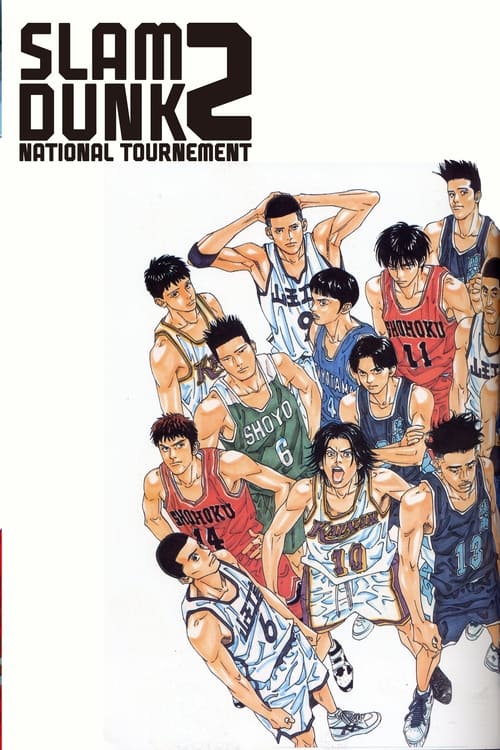
Slam Dunk 2: National Tournement
Plot
Set during the Inter High Championships, Shohoku take on Tsukubu, one of this year's dark horses. It's a clash of acquaintances as Anzai will face his former student which is now the coach of Tsukubu, while Akagi & Kogure meet Godai their former classmate and Tsukubu's captain. Finally Sakuragi is irked by the presence of Nango, Tsukubu's center, who vies for Haruko's attention.
Get the Weekly Woke Watchlist
New and trending movies scored for woke bias, preachy messaging, and forced political themes — before you waste your evening.
No spam. One useful email per week.
Overall Series Review
Categorical Breakdown
The narrative centers on a basketball tournament where character success is based entirely on athletic skill, training, and merit, reflecting the universal meritocracy principle. No characters are vilified based on race, and the plot does not use immutable characteristics as a factor in the conflict or social hierarchy. The film is set in a Japanese context and maintains cultural authenticity.
The movie is set within the world of Japanese high school sports, which the story treats with respect and seriousness as a vehicle for personal growth and national competition. There is no hostility toward Japanese culture or institutions, nor is there any critique of Western civilization or its values.
The female characters, Haruko Akagi and Ayako, function in traditional supportive roles as manager and love interest/motivation. They are not depicted as 'Girl Boss' figures and do not participate in the core athletic conflict. While they are distinct, their roles are secondary to the male players' journey, reflecting a gender dynamic that centers the male experience without actively celebrating motherhood (anti-natalism) or emasculating the male characters, who exhibit protective masculinity.
The narrative features a classic high school love triangle where two male characters vie for the attention of a female character, Haruko. The central romantic dynamic is a traditional male-female pairing. The movie contains no elements of queer theory, discussion of alternative sexualities, or lecturing on gender identity.
The film’s morality is entirely focused on the objective rules of basketball, sportsmanship, and the transcendent morality of effort and teamwork leading to victory or defeat. There is no mention of religion, Christianity, or any exploration of moral relativism; the moral framework is objective and tied to the sport itself.
Get the Weekly Woke Watchlist
New and trending movies scored for woke bias, preachy messaging, and forced political themes — before you waste your evening.
No spam. One useful email per week.