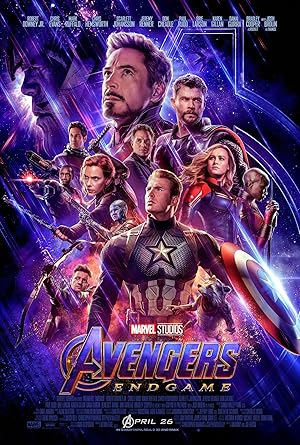
Avengers: Endgame
Plot
After the devastating events of Avengers: Infinity War (2018), the universe is in ruins due to the efforts of the Mad Titan, Thanos. With the help of remaining allies, the Avengers must assemble once more in order to undo Thanos's actions and undo the chaos to the universe, no matter what consequences may be in store, and no matter who they face...
Get the Weekly Woke Watchlist
New and trending movies scored for woke bias, preachy messaging, and forced political themes — before you waste your evening.
No spam. One useful email per week.
Overall Series Review
Categorical Breakdown
The film’s climax includes a deliberate clearing out of the original white male core: the lead white male hero dies, another is severely injured and retires, and the third hands his mantle to a non-white character. The focus remains on the merit of the characters' actions (Tony Stark's genius and sacrifice; Captain America's worthiness and moral courage), but the strategic restructuring of leadership is a clear pivot toward intersectional hierarchy for the franchise going forward.
The entire plot revolves around undoing a cosmic disaster to restore Earth and the universe, positioning the traditional home and civilization as the ultimate good worth fighting and dying for. The heroes are explicitly motivated by the preservation of their homes and families, reflecting an attitude of gratitude and civilizational defense.
The climax features a gratuitous 'A-Force' shot where all female heroes assemble into an improbable, gender-segregated formation to move the gauntlet, an overtly forced moment criticized as a 'girl boss' token gesture. Furthermore, a major male hero, Thor, is depicted as emasculated, unfit for rule, and his kingship is passed to the powerful female character Valkyrie.
The presence of alternative sexuality is limited to a single, brief cameo of a minor character in a support group, who mentions a date with 'another man.' This moment is isolated, does not center the sexual ideology, and has no bearing on the main plot or character development, functioning purely as a tokenistic nod. The main arcs celebrate the nuclear family and traditional male-female pairing.
The film is based on a clear transcendent morality: Thanos’s mass murder, based on utilitarian grounds, is absolute evil, and the heroes’ action to restore life is absolute good. The climactic act is a self-sacrifice by the main hero to save all of humanity, a clear reflection of transcendent moral law and redemptive themes. There is no hostility toward religion or embrace of moral relativism in the core narrative.
Get the Weekly Woke Watchlist
New and trending movies scored for woke bias, preachy messaging, and forced political themes — before you waste your evening.
No spam. One useful email per week.