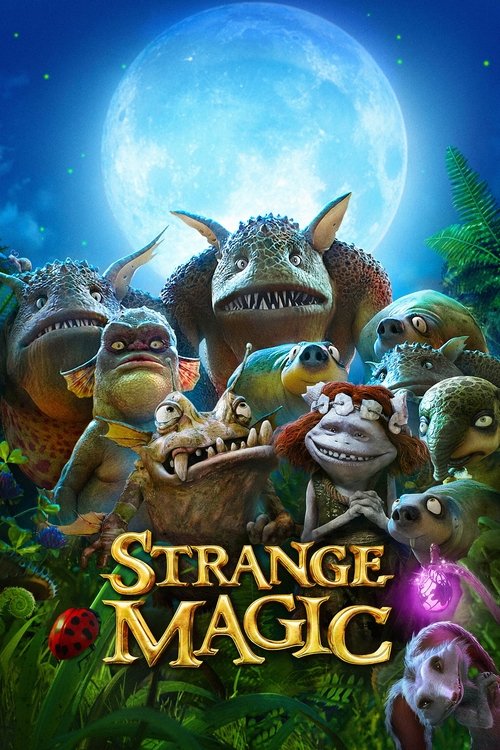
Strange Magic
Plot
A love potion works its devious charms on fairies, elves and the swamp-dwelling Bog King as they all try to possess the potion for themselves.
Get the Weekly Woke Watchlist
New and trending movies scored for woke bias, preachy messaging, and forced political themes — before you waste your evening.
No spam. One useful email per week.
Overall Series Review
Categorical Breakdown
Characters are judged by the content of their soul, not their species, with the core theme being a clear condemnation of judging people by how they look instead of who they are. The ugly, dark-realm Bog King proves to be nobler than the beautiful, well-born Fairy Prince Roland, upholding the principle of universal meritocracy of character. The conflict is based on prejudice against species/appearance, not human immutable characteristics.
The Fairy Kingdom, the 'home' civilization, is portrayed as shallow and prejudiced, with its king valuing alliances over his daughter's happiness. The Dark Forest, the 'other' culture, is depicted as misunderstood and having a good heart beneath its menacing exterior, which slightly favors the Noble Savage trope. However, the ultimate resolution is a union and balance between the two realms, symbolized by the Yin-Yang, not a total demonization of the home culture.
The protagonist, Marianne, immediately becomes a 'tough girl' and skilled fighter after her heartbreak, presenting her as an instantly powerful 'Girl Boss' archetype. Her initial fiancé, Roland, a conventionally attractive prince figure, is depicted as a self-obsessed, cowardly, and manipulative simpleton whose primary goal is acquiring an army. The narrative elevates the female lead's physical and moral competence by emasculating the traditional male hero figure.
The narrative's focus remains on traditional male-female romantic pairings, even unconventional ones like the fairy princess and the Bog King. There is no centering of alternative sexualities or explicit deconstruction of the nuclear family. A brief scene, however, includes two male characters kissing for a fleeting moment of comic relief.
The movie operates within a secular, magical fairy-tale universe where a clear objective moral truth is enforced: love must be authentic and based on inner character, not superficial appearance or forced with magic. The film's moral framework promotes transcendent morality in a non-religious context. There is no open hostility toward traditional religion.
Get the Weekly Woke Watchlist
New and trending movies scored for woke bias, preachy messaging, and forced political themes — before you waste your evening.
No spam. One useful email per week.