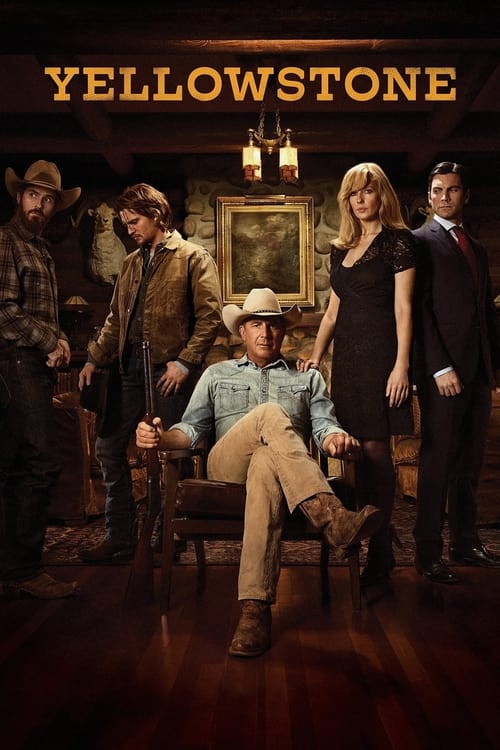
Yellowstone
Season 1 Analysis
Season Overview
No specific overview for this season.
Season Review
Categorical Breakdown
The plot heavily relies on race and legacy for its core conflict, pitting the white-led Dutton family against the Native American-led Broken Rock Reservation, which seeks to reclaim the land. The narrative does not vilify 'whiteness' but instead champions the white, patriarchal family as the besieged protagonists fighting for their heritage. One subplot co-opts the historical tragedy of forced sterilization of Indigenous women by centering the story around the white daughter, Beth, which reframes a systemic issue of racial oppression through the lens of individual family drama. A central Native American character, Monica Dutton, is criticized for being inauthentically cast and lacking narrative depth.
The central pillar of the entire series is the defense of the Dutton family's home, heritage, and way of life. The patriarch, John Dutton, views his vast ranch as a non-negotiable ancestral institution, not a mere piece of property, and dedicates his life to defending it. External forces, particularly land developers and government regulators—who represent modern, urban, and bureaucratic interests—are consistently framed as morally corrupt threats to the traditional civilization of the American West. The theme is one of gratitude toward a cultural heritage and a refusal to self-destruct.
The daughter, Beth Dutton, functions as a highly aggressive, ruthless, and successful 'Girl Boss' in the corporate world, often besting men in business. However, she is far from a woke ideal: she is intensely loyal to her patriarchal father, displays internal sexism and 'homonegativism,' and her central tragedy and motivation revolve around her involuntary inability to become a mother. This portrayal complicates the 'Girl Boss' trope, showing a highly functional, aggressive female lead who ultimately embraces a deeply traditional, protective role within a male-led system. She does not advocate for female empowerment in society at large.
Alternative sexualities or gender ideology are not themes addressed in the first season. The narrative structure is entirely centered on traditional, though dysfunctional, male-female pairings and the maintenance of the nuclear family's legacy. One main female character's dialogue contains explicit homonegativism. The structure adheres to a normative pairing as the standard.
There is no explicit hostility toward religion, nor are Christian characters specifically targeted as bigots or villains. The series operates on a secular moral code where loyalty to the family and the land is the highest law. Morality is subjectively defined by the Duttons' need to protect the ranch, often involving extreme, extra-legal violence (e.g., 'The Train Station'). This constant moral relativism regarding murder is a spiritual vacuum, but it is not presented as an ideological critique from a progressive 'power dynamics' standpoint, but rather as the dark necessity of maintaining an empire.