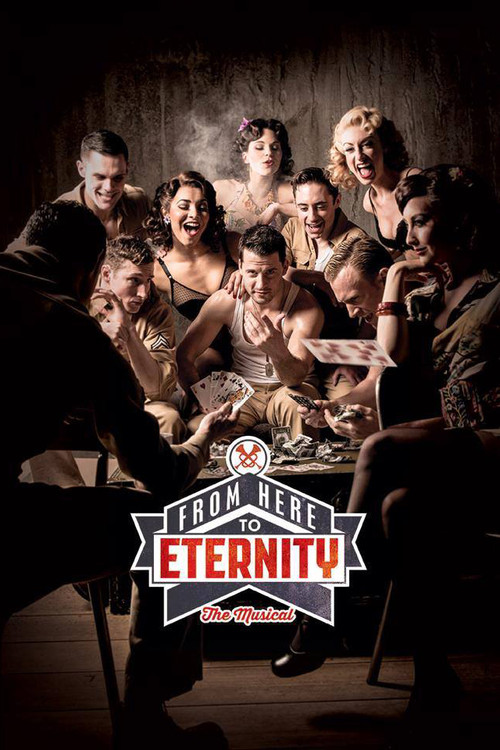
From Here to Eternity
Plot
In 1941 Hawaii, a private is cruelly punished for not boxing on his unit's team, while his captain's wife and second in command are falling in love.
Get the Weekly Woke Watchlist
New and trending movies scored for woke bias, preachy messaging, and forced political themes — before you waste your evening.
No spam. One useful email per week.
Overall Series Review
Categorical Breakdown
The central conflict relies on the universal theme of personal honor and character merit (Prewitt's refusal to box) versus institutional corruption. The core characters are not defined by an intersectional hierarchy. The plot focuses on the brutal, systemic abuse *within* the Army, which is a class/power dynamic, not a lecture on systemic oppression based on race or modern immutable characteristics.
The narrative presents a harsh and unflattering portrait of the US Army as an institution filled with corruption, sadism, and cruelty in the lead-up to Pearl Harbor. This is a severe critique of a core American institution. However, the dramatic tension is a critique of a broken system rather than a blanket condemnation of Western civilization, and it does not celebrate external cultures as morally superior.
The female leads are an officer's wife seeking an affair to escape an oppressive marriage and a prostitute seeking a new life. They are complex and nuanced in a male-centric world. The narrative does not employ 'Girl Boss' tropes or male emasculation for political lecture; instead, it portrays a traditional melodrama where the women are defined by their circumstances and desire for escape.
The story includes the tragic subplot of Maggio, who is tormented and killed in the stockade, with his character being associated with 'gay prostitution' in the uncensored source material. The narrative acknowledges and portrays the period's homophobia and institutional bigotry within the Army. The focus is on the oppression as a period-authentic tragedy rather than centering a modern queer theory or gender ideology lens.
The dramatic tension and moral conflict are entirely secular, focusing on military corruption, personal honor, and broken relationships. There is no evidence in the plot or commentary of hostility toward religious figures or themes, or a direct embrace of moral relativism over transcendent moral law.
Get the Weekly Woke Watchlist
New and trending movies scored for woke bias, preachy messaging, and forced political themes — before you waste your evening.
No spam. One useful email per week.