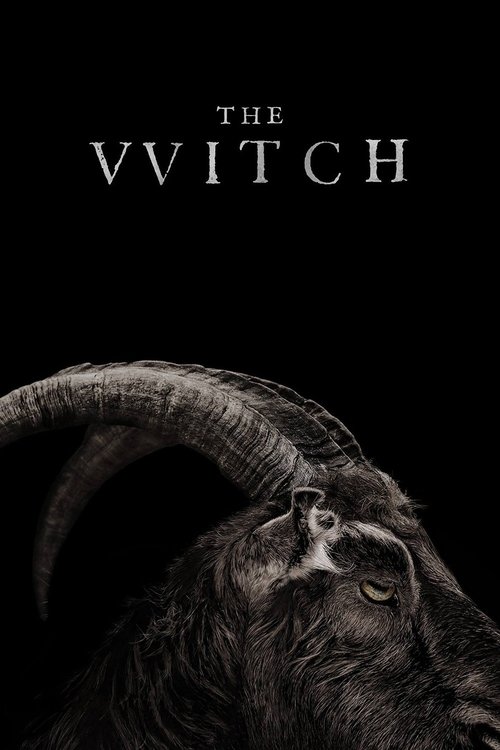
The Witch
Plot
In 1630, a farmer relocates his family to a remote plot of land on the edge of a forest where strange, unsettling things happen. With suspicion and paranoia mounting, each family member's faith, loyalty and love are tested in shocking ways.
Get the Weekly Woke Watchlist
New and trending movies scored for woke bias, preachy messaging, and forced political themes — before you waste your evening.
No spam. One useful email per week.
Overall Series Review
Categorical Breakdown
The casting is historically authentic to the 1630s Puritan setting, consisting entirely of white characters. The plot is focused on religious and familial conflict, not race or immutable characteristics as a source of systemic oppression. Characters are judged by their piety and soul's purity within their own belief system.
The narrative fundamentally frames the Puritan home culture and ancestral beliefs—an extreme branch of Western civilization—as a source of immense psychological pressure, paranoia, and trauma that drives the family to self-destruction. The family's descent into madness and violence is presented as a direct consequence of their rigid, fanatical religious heritage. The protagonist's final choice is a complete deconstruction and rejection of this heritage, exchanging it for a pagan-Satanic path of self-realization.
The Puritan society is depicted as intensely patriarchal and misogynistic, creating a highly oppressive environment for women. The male characters, particularly the father, are shown as failing protectors whose pride and incompetence lead to the family's ruin. The female protagonist's arc culminates in the rejection of domesticity and motherhood, which are framed as an inescapable 'prison' of labor and guilt, achieving 'autonomy' through a pact with the Devil.
The film focuses entirely on the traditional male-female pairing and the breakdown of the nuclear family unit. There are no elements of alternative sexualities being centered, nor is there any commentary or lecturing on gender theory, making the structure entirely normative for the time period.
Traditional Christianity, specifically Puritanism, is portrayed as a toxic force that creates profound shame, paranoia, and oppression for its followers. Christian characters are driven to bigoted accusations and violence against their own family members. The 'villain' in the film, the Devil, offers the protagonist 'salvation' and a 'delicious life' as a clear, desirable alternative to her Christian existence.
Get the Weekly Woke Watchlist
New and trending movies scored for woke bias, preachy messaging, and forced political themes — before you waste your evening.
No spam. One useful email per week.