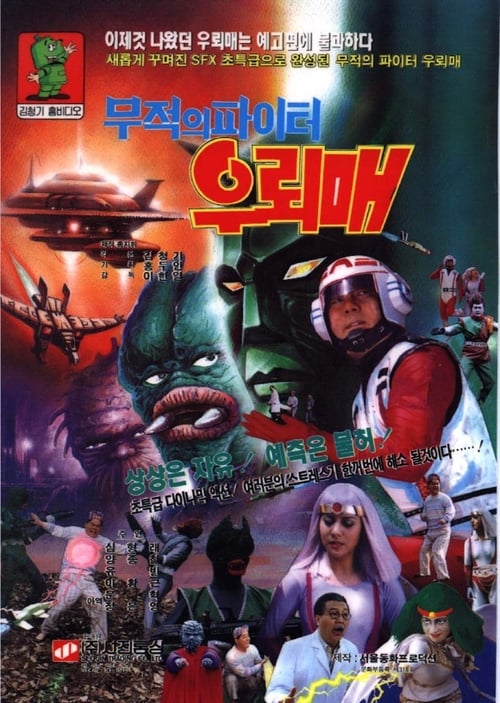
Invincible Fighter Thunderhawk
Plot
An alien villain, who has returned to the peaceful planet Earth, is a good-natured villain trying to avenge Luka for Thunder Hawk. After an attack on the earthlings, Esperman, and Daily, Khan sends Purpur, Momo, and Lizell to attack Thunderhawk, Esperman, and Daily, but often fails. Kan, who used all sorts of sneaky means, such as kidnapping Dr. Yang and kidnapping Chadol, succeeded in deceiving Esperman and Daily by using the trick of killing his subordinates by himself. He gets Esperman and Daily into trouble, but finally, with the help of the procrastination that appeared, he defeated the Khan gang with the help of the procrastination that appeared. They defeat the enemy and keep the peace of the planet.
Get the Weekly Woke Watchlist
New and trending movies scored for woke bias, preachy messaging, and forced political themes — before you waste your evening.
No spam. One useful email per week.
Overall Series Review
Categorical Breakdown
The narrative places all characters on the same side of the hero/villain divide without reference to race or immutable characteristics. The central conflict is Earthlings versus aliens, focusing on universal stakes rather than a hierarchy of privilege. Character judgment is based purely on the content of their actions and their merit in either attacking or defending the planet's peace.
The entire plot revolves around Esperman and Daily successfully protecting 'the peace of the planet,' which affirms a positive view of the home and civilization. The alien is the antagonist, confirming the alien/other culture as the hostile force. No element suggests the home culture is fundamentally corrupt or that ancestors are demonized; the goal is to defend the current institutions.
Daily is a core hero alongside Esperman, and the villains' subordinates include female characters like Purpur, Momo, and Lizell. All characters function within the action context, their success or failure tied to the plot's demands. There is no focus on emasculation of male characters, anti-natalist messaging, or 'Girl Boss' tropes; the gender dynamics are assumed to be complementary and traditional for an action/adventure film of this era.
The plot is entirely focused on an extraterrestrial invasion and subsequent defense, with no reference to sexual ideology or alternative sexualities. The film centers on a traditional male-female pairing in Esperman and Daily, with a clear focus on the sci-fi adventure without lecturing on gender theory or the deconstruction of the nuclear family.
Religion is absent from the narrative, which is a pure sci-fi action conflict. The moral framework is objective: the villain is defeated, and peace is kept, establishing a clear line between good and evil. There is no moral relativism; the hero's cause is unequivocally the preservation of order and life.
Get the Weekly Woke Watchlist
New and trending movies scored for woke bias, preachy messaging, and forced political themes — before you waste your evening.
No spam. One useful email per week.