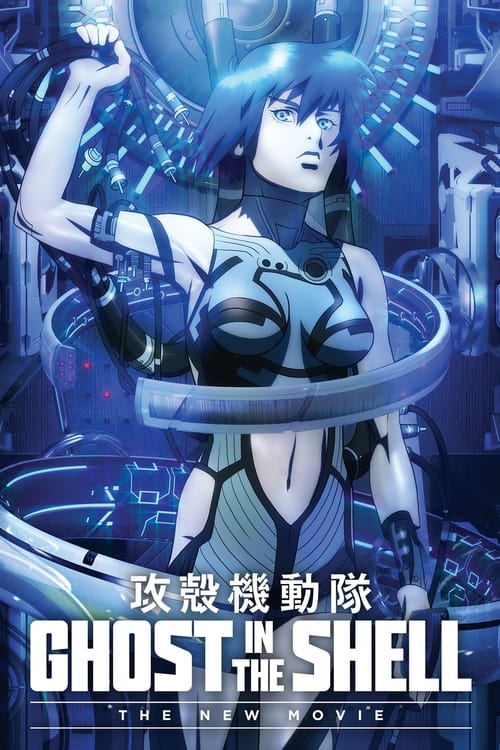
Ghost in the Shell: The New Movie
Plot
When a ghost-infecting virus known as Fire-Starter begins spreading through the system resulting in the assassination of the Japanese Prime Minister, Major Motoko Kusanagi and her elite team of special operatives are called in to track down its source.
Get the Weekly Woke Watchlist
New and trending movies scored for woke bias, preachy messaging, and forced political themes — before you waste your evening.
No spam. One useful email per week.
Overall Series Review
Categorical Breakdown
The narrative universally applies the concept of 'ghost' (soul/consciousness) as the basis of a character's worth, transcending physical body, race, or immutable characteristics. The one character with a biological disadvantage is the villain, making the conflict centered on a critique of technocratic classism (cybernetic vs. un-cyberized/obsolete), not racial or intersectional hierarchy. The cast is predominantly East Asian/Japanese, reflecting its setting as a neo-Japanese state.
The movie's setting is a high-tech near-future Japan where a corrupt system of coercive cyberization is criticized, but this is a critique of a specific technology-driven military-industrial complex and political conspiracy, not a broad vilification of Japanese culture, history, or ancestry. The team of heroes, Section 9, operates as a shield against chaos to protect the public and the nation's security, adhering to the principle of a 'Chesterton's Fence' perspective on institutions.
Major Motoko Kusanagi is the highly skilled, highly competent, and complex leader of the elite special operations unit, Section 9. Her command is based entirely on her unparalleled merit as a tactician and fighter, not a 'Girl Boss' tokenism. Male characters like Batou, Aramaki, and Togusa are also competent, and the dynamic is one of professional trust and complementary skills, not the emasculation of males. Motherhood and family are not central themes, but neither is an anti-natalist message promoted.
The core question of identity in the film is centered on transhumanism, specifically the 'ghost' (consciousness) versus the 'shell' (cybernetic body), and the authenticity of selfhood, not alternative sexual or gender identity. Traditional male-female pairing is normative for background characters, but the main characters' sexuality is private and irrelevant to the plot, with no lecturing or explicit sexual ideology present.
The movie explores the question of the 'ghost' (soul) in a secular, philosophical context concerning technology and consciousness, rooted in themes of Cartesian Dualism. This is a scientific and philosophical inquiry, not a direct attack on traditional religion, especially Christianity, which is functionally absent from the narrative's central concerns. Morality is challenged by the nature of cybercrime and government corruption, but it leans toward an objective truth (finding the real killer, exposing the conspiracy) rather than full moral relativism.
Get the Weekly Woke Watchlist
New and trending movies scored for woke bias, preachy messaging, and forced political themes — before you waste your evening.
No spam. One useful email per week.