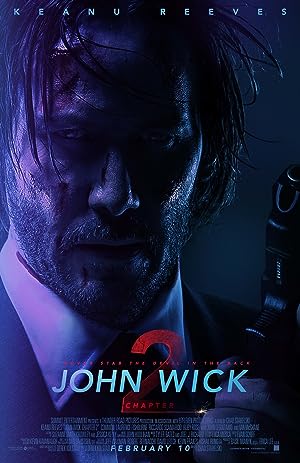
John Wick: Chapter 2
Plot
Bound by an inescapable blood debt to the Italian crime lord, Santino D'Antonio, and with his precious 1969 Mustang still stolen, John Wick--the taciturn and pitiless assassin who thirsts for seclusion--is forced to visit Italy to honour his promise. But, soon, the Bogeyman will find himself dragged into an impossible task in the heart of Rome's secret criminal society, as every killer in the business dreams of cornering the legendary Wick who now has an enormous price on his head. Drenched in blood and mercilessly hunted down, John Wick can surely forget a peaceful retirement as no one can make it out in one piece.
Get the Weekly Woke Watchlist
New and trending movies scored for woke bias, preachy messaging, and forced political themes — before you waste your evening.
No spam. One useful email per week.
Overall Series Review
Categorical Breakdown
The plot centers on John Wick's universal merit in the assassin trade, where skill determines status, not immutable characteristics. The criminal underworld is racially and ethnically diverse, featuring an African-American rival assassin, a European-American concierge, an Italian crime boss, and other global characters whose roles are defined by their position and competence in the hierarchy. No character is presented as incompetent or evil based on a specific race or ethnicity, and the narrative does not lecture on privilege or systemic oppression.
The film does not engage in hostility toward Western civilization, but rather uses iconic Western settings like New York and Rome as mere backdrops for a global, hyper-stylized criminal organization. The rules of The Continental hotel and the 'Marker' system are treated with immense respect and formality, functioning as a Chesterton's Fence where the rules of the institution must be rigidly followed to prevent chaos. The corruption is restricted to the amoral nature of the criminal underworld itself, not the West as a culture.
Female characters are present as formidable, highly capable figures, operating on the same meritocracy as the men. Gianna D’Antonio is a powerful crime boss who commands her own syndicate. Ares is a deadly, high-ranking assassin and bodyguard who serves as a skilled combatant rival. These women are defined by their deadliness, not their gender, and their presence does not lead to the emasculation of the male protagonist. The motivation for John is his late wife's memory and their dog, which is an anti-family message by omission but does not actively villainize motherhood or celebrate career over family.
Alternative sexualities are not a focus of the plot. The character Ares is played by an openly gender-fluid actress, but the character is not explicitly presented as non-binary in the narrative; the character's trait is being mute and a world-class killer. The central driving force is the memory of John's traditional nuclear family life with his deceased wife, and the narrative does not deconstruct the male-female pairing or lecture on gender ideology.
The movie appropriates Christian and religious imagery and terminology, such as 'Excommunicado,' 'consecrated ground,' 'temple,' and the Roman setting, to give ritual and weight to the assassin's amoral, man-made code. The world's rules and moral center are entirely defined by the High Table and its institutions, which replaces transcendent morality with a codified, subjective power structure. This substitution of a human-centric code of vengeance and honor for a higher moral law creates a spiritual vacuum.
Get the Weekly Woke Watchlist
New and trending movies scored for woke bias, preachy messaging, and forced political themes — before you waste your evening.
No spam. One useful email per week.